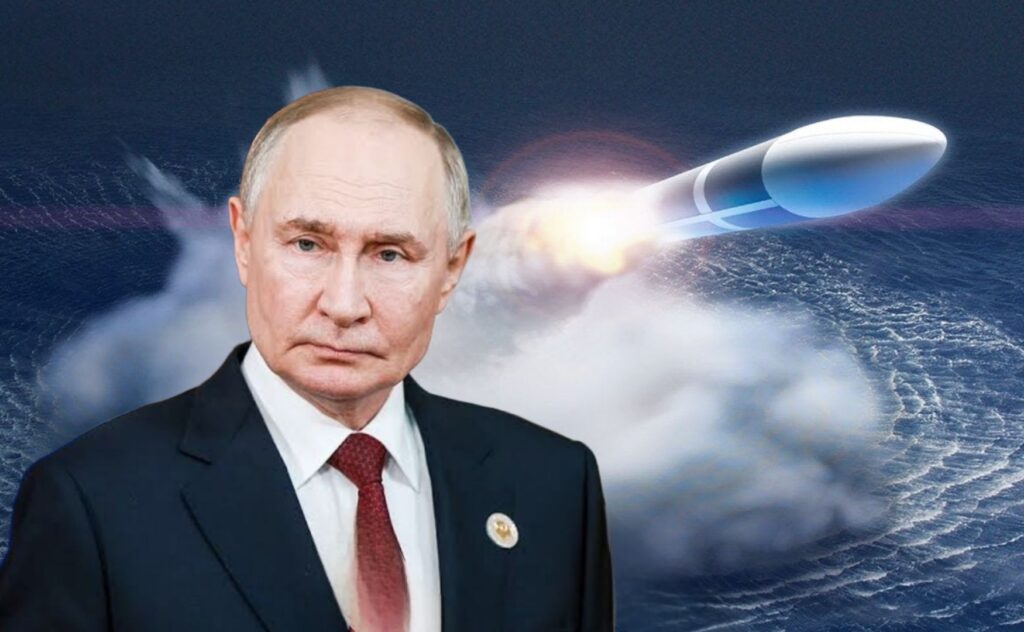
How Russia Could Reach US Cities Very Fast With Nuclear Missiles
Whenever the President of the United States travels, a military officer follows him everywhere with a special briefcase called the “nuclear football.” This briefcase contains communication tools and instructions that allow the president to order a nuclear strike. The president also carries a small card with secret codes needed to confirm such an order.
These tools are always kept close because the warning time for a nuclear attack is very short. If Russia launched a missile from its northern Arctic region, it could reach major US cities in about 18 minutes.
Military experts explain that intercontinental missiles travel extremely fast. Once launched, there would be very little time to respond. A missile fired from Russia’s Kola Peninsula, located near Norway in the Arctic, could cross the Arctic Ocean, pass Greenland, and reach the United States in less than 20 minutes.
If a large nuclear weapon exploded over a city like New York, the heat would be so intense that everything near the center would be destroyed instantly. Many buildings would collapse, fires would spread quickly, and radioactive dust would travel far beyond the city.
A similar attack on Washington DC would cause huge loss of life and destroy important government buildings. An explosion over Chicago would wipe out large areas of the city in seconds. After the explosion, radioactive fallout would spread through the air, harming people, animals, water, and farmland for many miles.
Much of this threat comes from Russia’s strong military presence in the Arctic. The Kola Peninsula is home to Russia’s Northern Fleet, which includes nuclear submarines and modern missiles. This area also hosts testing sites for new weapons.
Over the past 20 years, Russia has invested heavily in rebuilding and expanding its Arctic military power. Today, it operates more than 40 military facilities in the region, including bases, airfields, radar stations, and ports. Russia also controls about half of the Arctic region, giving it a major advantage.
The Northern Fleet includes many nuclear-powered submarines and advanced missiles, including hypersonic weapons that travel many times faster than sound. Russia has also tested a new nuclear-powered cruise missile that can stay in the air for long periods and travel very long distances.
Military experts say the balance of nuclear power has helped prevent major wars between large countries since World War II. However, new weapons and rising tensions are making the situation more dangerous.
Russia also has a large fleet of nuclear icebreakers, which allow it to move ships through frozen Arctic waters year-round. This gives Russia more freedom to operate in the region than Western countries.
The Arctic is becoming more important because melting ice is opening new shipping routes between Europe and Asia. One of these routes, controlled largely by Russia, could bring huge economic benefits. This is important for Russia as it faces heavy international sanctions.
Western countries, including the United States and NATO allies, are now paying more attention to Arctic security. NATO has increased military exercises in cold regions like Norway, Finland, and Greenland. Large training exercises involving tens of thousands of soldiers are planned to show unity and readiness.
Greenland is especially important because of its location between North America and Europe. The United States already operates a military base there that monitors missile activity over the Arctic. Its position allows early detection of missiles launched from Russia or China.
The US is also developing a new missile defense system that includes ground-based defenses and space-based sensors. These systems aim to detect, track, and possibly stop incoming missiles earlier than before.
However, experts warn that hypersonic missiles are very hard to stop. These missiles can travel at extremely high speeds and follow unpredictable paths. Russia is developing several such weapons, some of which may already be operational.
Because of these developments, military analysts believe existing defense systems are no longer enough. Both North America and Europe may need to redesign their defense strategies to deal with this new kind of threat.
Many experts agree that the world is becoming more unstable. They say strong cooperation between NATO countries is more important than ever to prevent conflict, protect shipping routes, and maintain global security.
As technology advances and reaction times become shorter, the Arctic will play an even bigger role in future military and security planning. The balance of power in this region could shape global peace and stability for many years to come.
#NuclearWeapons#Russia#USA#ArcticSecurity#MissileDefense#NATO#GlobalSecurity— in Washington, D.C.