Saudi Arabia Considers Major Security Shift: Rethinking the U.S. Air Force Presence
Saudi Arabia is reportedly debating a significant change in its defense posture—one that could eventually reduce or even end the presence of the United States Air Force at key Saudi air bases. If such a decision were ever implemented, it would mark one of the most consequential shifts in Gulf security policy in decades.

The discussion reflects a deeper debate unfolding in Riyadh about sovereignty, regional stability, and the future structure of Middle Eastern defense cooperation. As tensions across the region continue to rise, Saudi leaders are reassessing whether the long-standing model of hosting foreign military forces still serves the kingdom’s strategic interests.
Prince Sultan Air Base at the Center of the Debate
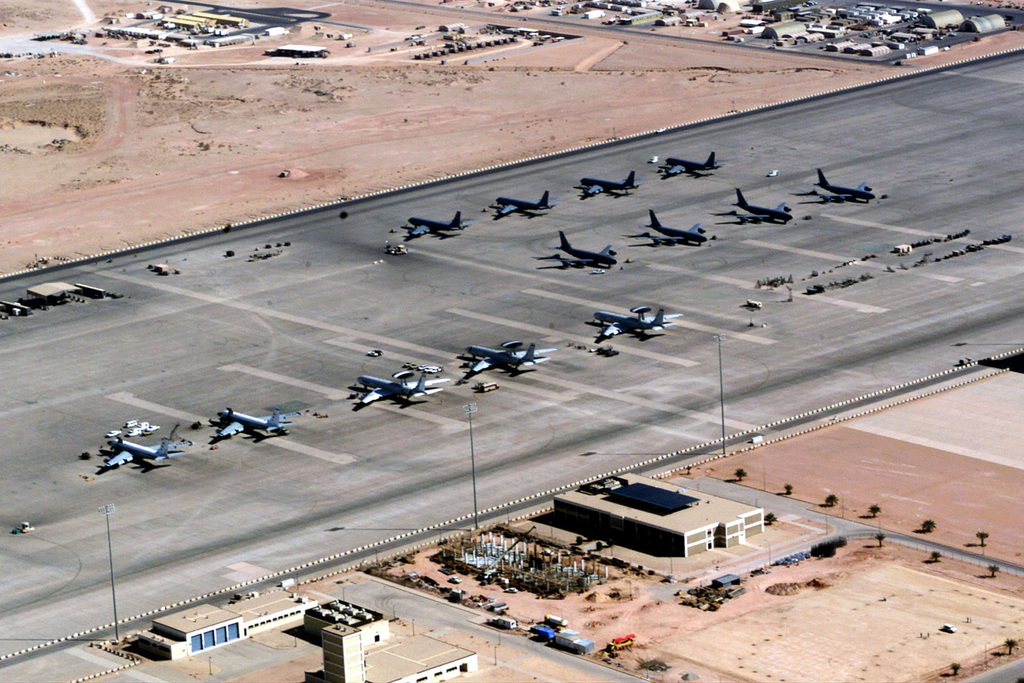
Prince Sultan Air Base—located southeast of Riyadh—has long been one of the most important military facilities in the region.


4
Originally built in the early 1950s and operated by the Royal Saudi Air Force, the base later became a key hub for coalition operations during conflicts in the Middle East. Today it hosts both Saudi units and American forces, including the 378th Air Expeditionary Wing, which supports aerial surveillance, refueling, and command-and-control missions.
The installation features multiple long runways and extensive support facilities, allowing it to host a wide variety of aircraft—from reconnaissance planes to aerial refueling tankers.
For years, the base has been a cornerstone of U.S.–Saudi defense cooperation. Yet in the current geopolitical climate, its strategic importance is also raising difficult questions inside Saudi policymaking circles.
The Strategic Risks of Hosting Foreign Forces
Recent tensions across the region have highlighted the vulnerabilities associated with hosting large foreign military assets.
In modern warfare, air bases housing advanced aircraft, command systems, and logistics hubs are often among the first targets during conflict. Analysts note that these installations can become magnets for missile strikes or drone attacks during periods of escalating confrontation.
Saudi Arabia’s leadership is therefore examining whether hosting such high-profile foreign infrastructure increases the kingdom’s exposure to regional retaliation.
The argument being considered in some policy circles is simple but significant:
If foreign forces are operating from Saudi soil, the kingdom may automatically become part of conflicts involving those forces.
This risk calculus is driving a broader discussion about how the Gulf’s security architecture should evolve in the coming decades.
Encouragement from Regional Allies
Another factor shaping the debate is encouragement from several allied Muslim nations that support a more self-reliant regional security framework.
Among those countries is Pakistan, which maintains close military ties with Saudi Arabia and has historically supported the idea of stronger defense cooperation among Muslim states.
The concept being discussed informally among some regional strategists is that Middle Eastern and Islamic countries should gradually develop their own collective security arrangements—reducing reliance on permanent deployments from outside superpowers.
Such an approach would not necessarily end partnerships with Western nations, but it could shift the balance toward greater regional responsibility for defense.
Balancing Partnership and Autonomy
For decades, Saudi Arabia’s defense strategy has relied heavily on cooperation with the United States.
American military presence in the kingdom has provided advanced technology, intelligence sharing, and operational support. The relationship also serves as a deterrent to potential adversaries in the region.
However, Saudi Arabia’s leadership has increasingly emphasized strategic autonomy—the ability to make security decisions independently while maintaining alliances.
The internal debate now revolves around a fundamental question:
How can Saudi Arabia preserve its partnership with Washington while also gaining greater control over its own defense strategy?
This balancing act reflects a broader shift occurring across many countries in the Global South, where governments are seeking to diversify security partnerships and reduce reliance on any single global power.
What a Transition Would Require
If Saudi Arabia were ever to significantly reduce the U.S. military footprint on its territory, the transition would require major investments in domestic defense capabilities.
Experts say several areas would need rapid expansion:
1. Airpower
Saudi Arabia would need to further expand the capabilities of the Royal Saudi Air Force, including advanced fighter aircraft, surveillance systems, and aerial refueling fleets.
2. Missile Defense
Given the growing use of ballistic missiles and drones in modern conflicts, strengthening integrated air defense systems would be essential.
3. Logistics and Infrastructure
Foreign forces currently provide extensive logistical support, including maintenance, intelligence, and supply networks. Saudi Arabia would need to scale up its own infrastructure to replace those capabilities.
4. Regional Defense Cooperation
Closer coordination with neighboring countries could become a key pillar of future security arrangements.
A Possible Turning Point for the Gulf
Even if the idea remains under discussion for now, analysts believe the debate itself is significant.
For decades, Gulf security has been built around the presence of major Western military forces. If Saudi Arabia were to reduce that presence, it could signal the beginning of a new era in regional defense policy.
Such a shift would not happen overnight. Military alliances and infrastructure built over decades cannot be easily replaced. Yet the conversation suggests that the Middle East may be entering a period of strategic recalibration.
A Changing Security Landscape
The Gulf region is undergoing profound transformation.
Economic diversification, new geopolitical alliances, and rapidly evolving military technology are reshaping how countries think about security. Saudi Arabia’s discussions about the future of foreign military presence reflect these broader trends.
Whether or not the U.S. Air Force ultimately reduces its footprint in the kingdom, the debate highlights an important reality:
Middle Eastern powers are increasingly seeking a greater role in shaping their own security architecture.
If Riyadh ultimately decides to pursue a more independent defense model, it could trigger ripple effects across the entire region—reshaping alliances, military deployments, and strategic calculations for years to come.