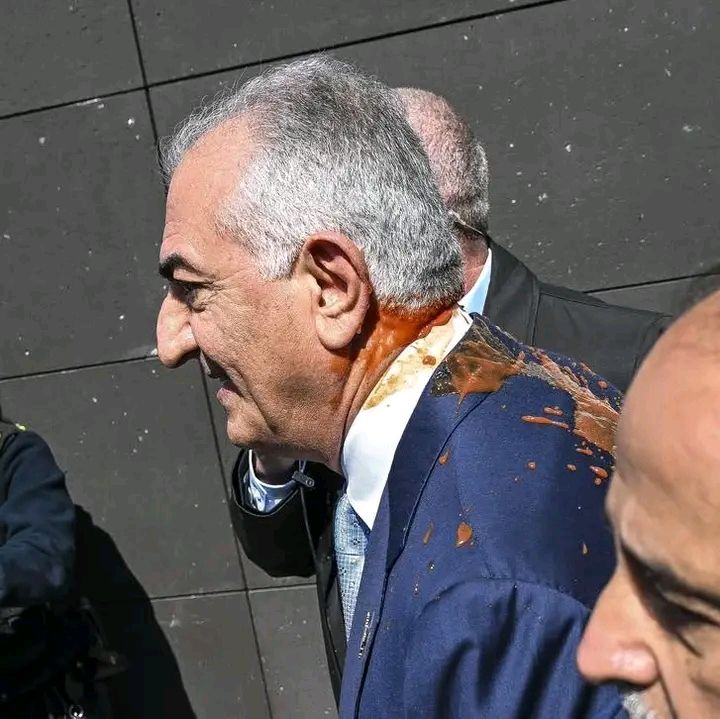
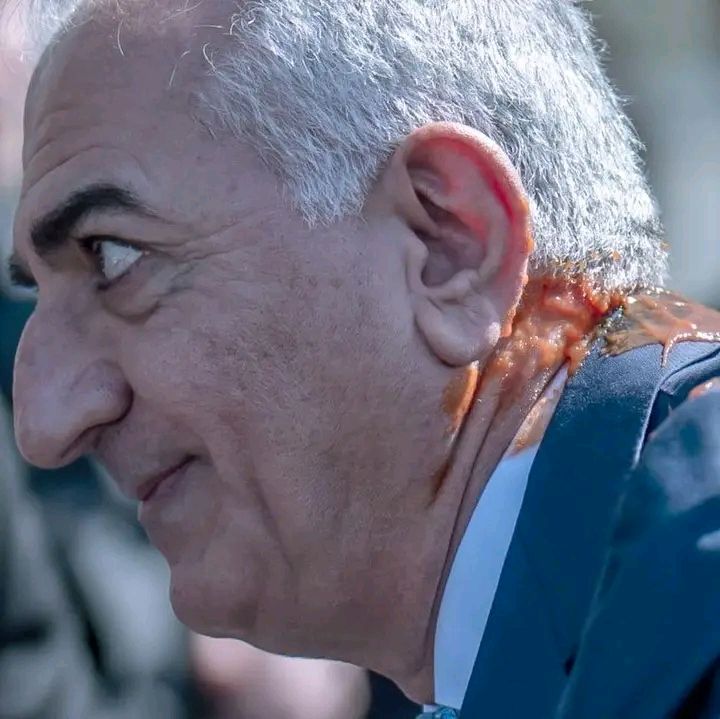
A dramatic and symbolic moment unfolded in the heart of Berlin today, where tensions surrounding Iran’s political future spilled into the streets in an unexpected and highly visual way. During a public appearance by Reza Pahlavi—the exiled son of Iran’s last monarch—a demonstrator reportedly threw tomato paste at him, turning an already charged atmosphere into a scene that quickly captured global attention.
The incident took place amid a gathering that drew both supporters and critics of the Islamic Republic of Iran. As Pahlavi addressed a crowd of followers and media, emphasizing themes of freedom, democracy, and a vision for a post-regime Iran, tensions were visibly simmering among opposing groups nearby. Protesters carrying flags, chanting slogans, and holding banners created an intense environment where political emotions ran high.
Then, in a sudden and startling act, a demonstrator believed to be sympathetic to the current Iranian government hurled tomato paste in Pahlavi’s direction. The bright red splash, while not physically harmful, was deeply symbolic—interpreted by many as an act of protest, defiance, and political messaging. Security personnel reacted swiftly, moving to shield Pahlavi and escort him away from the immediate area as the crowd erupted into a mix of shock, anger, and shouting.
Though brief, the moment carried significant weight. It underscored the deep divisions within the Iranian diaspora and highlighted how political rivalries continue to play out far beyond Iran’s borders. For many observers, the use of tomato paste was not random—it evoked imagery of protest tactics often used to convey anger without lethal intent, a theatrical yet pointed form of dissent.
Reza Pahlavi has long been a controversial yet influential figure in discussions about Iran’s future. As the son of the late Shah, he represents, to some, a potential alternative to the current regime—a symbol of secular governance and national unity. To others, however, he embodies a past era marked by monarchy and authoritarian rule. This dual perception often makes his public appearances flashpoints for both support and opposition.
Today’s incident in Berlin reflects that complexity. Supporters at the event were quick to condemn the act, calling it disrespectful and emblematic of the intolerance they associate with the current Iranian leadership. Some described it as an attempt to silence voices advocating for change, while others saw it as proof that the struggle for Iran’s political direction is far from resolved.
On the other side, critics of Pahlavi viewed the act as a form of protest—albeit controversial—against what they perceive as an attempt to reintroduce monarchical influence in Iranian politics. While many did not necessarily condone the method, they pointed to the underlying frustrations and ideological divides that fuel such confrontations.
Berlin, known for its vibrant political culture and history of public demonstrations, has often served as a stage for international voices and movements. The city’s openness allows for diverse perspectives to be expressed, but it also means that conflicts from other parts of the world can manifest in its public spaces. Today’s event is a clear example of how global political tensions can find local expression, even thousands of miles away from their origin.
Authorities are expected to review the incident, particularly regarding security arrangements and crowd control. While no serious injuries were reported, the act raises questions about the safety of public figures and the challenges of managing politically sensitive gatherings in open environments.
Beyond the immediate drama, the tomato paste incident serves as a reminder of the emotional intensity surrounding Iran’s political discourse. For decades, debates over governance, identity, and national direction have been deeply personal for Iranians both inside the country and across the diaspora. Events like this highlight how those debates are not confined to formal discussions or diplomatic channels—they are lived experiences, often expressed through passionate and sometimes confrontational actions.
Social media quickly amplified the scene, with images and videos circulating widely. Reactions ranged from outrage to support, from humor to serious political analysis. The visual nature of the act—simple yet striking—made it particularly shareable, turning a local moment into a global talking point within hours.
In many ways, the choice of tomato paste carries its own symbolism. It is messy, visible, and impossible to ignore—much like the political divisions it represents. Unlike more violent forms of protest, it stops short of causing harm, yet it leaves a lasting impression. It is protest as performance, designed to be seen, discussed, and remembered.
As the situation continues to unfold, one thing is clear: the struggle over Iran’s future remains deeply contested, with no easy resolution in sight. Figures like Reza Pahlavi will continue to draw both admiration and criticism, and public events involving such figures will likely remain charged with emotion.
Today’s incident in Berlin may have lasted only a few seconds, but its impact resonates far beyond that moment. It is a snapshot of a larger story—one of identity, power, and the enduring quest for a nation’s direction. Whether seen as an act of disrespect or a form of protest, it captures the intensity of a political struggle that continues to shape conversations around the world.