Russia’s Bold Leap in Oncology

4
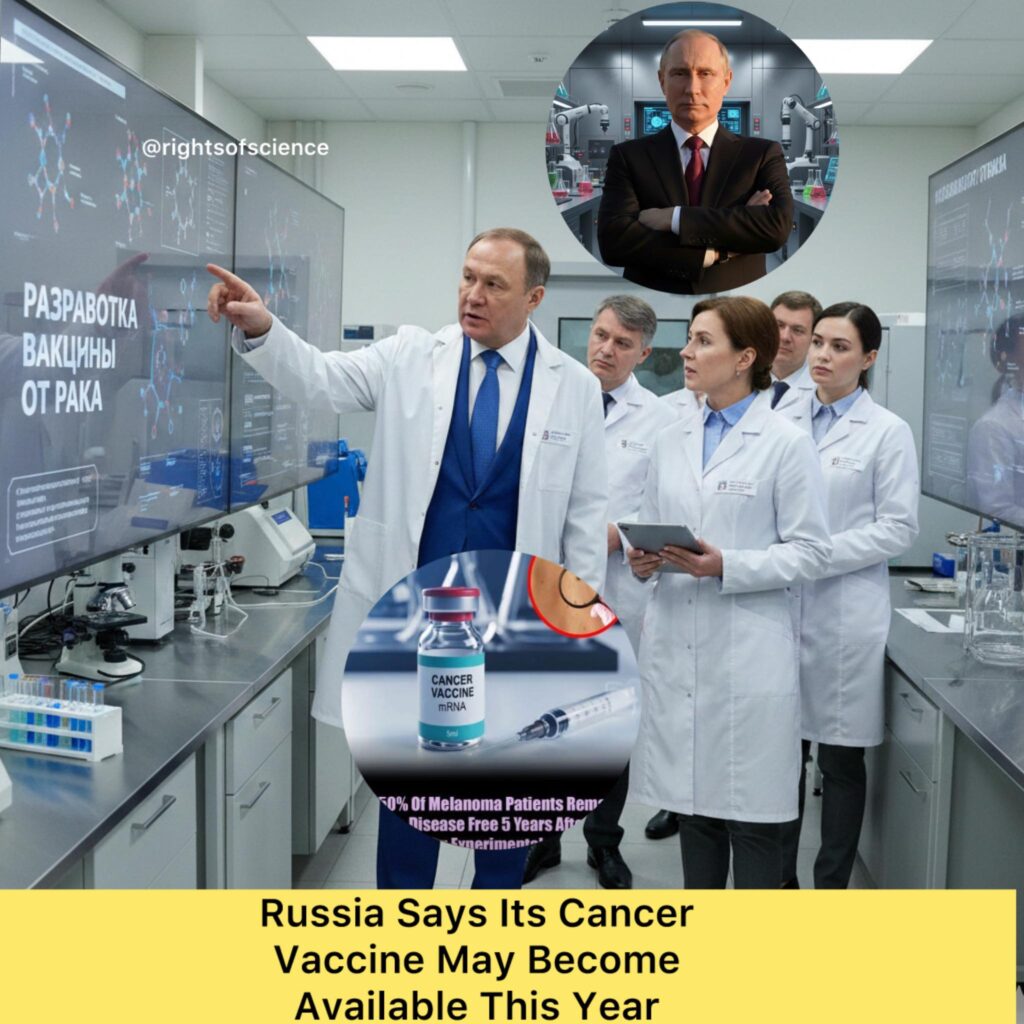
The global medical community is buzzing with anticipation following reports that Russia is preparing to make its cancer vaccine available to patients as early as this year. The announcement, highlighted by statements from Russian health officials and researchers, signals what could become one of the most significant developments in oncology in decades. At the heart of the excitement lies a technology that transformed the world during the COVID-19 pandemic: mRNA.
While traditional vaccines are designed to prevent infections before they occur, this new generation of therapeutic cancer vaccines aims to do something far more ambitious. Instead of stopping disease from entering the body, they seek to train the immune system to recognize and eliminate cancer cells that already exist. If successful, this strategy could mark a revolutionary shift in how humanity fights one of its deadliest adversaries.
From Pandemic Innovation to Cancer Revolution
The rapid development of mRNA vaccines during the COVID-19 crisis demonstrated the extraordinary flexibility and power of this platform. Companies such as Pfizer and Moderna showed the world that genetic instructions delivered via mRNA could safely teach the immune system to respond to a specific biological target. Instead of injecting weakened viruses or protein fragments, scientists could send molecular blueprints directly into cells, prompting them to produce harmless pieces of a pathogen that the immune system learns to attack.
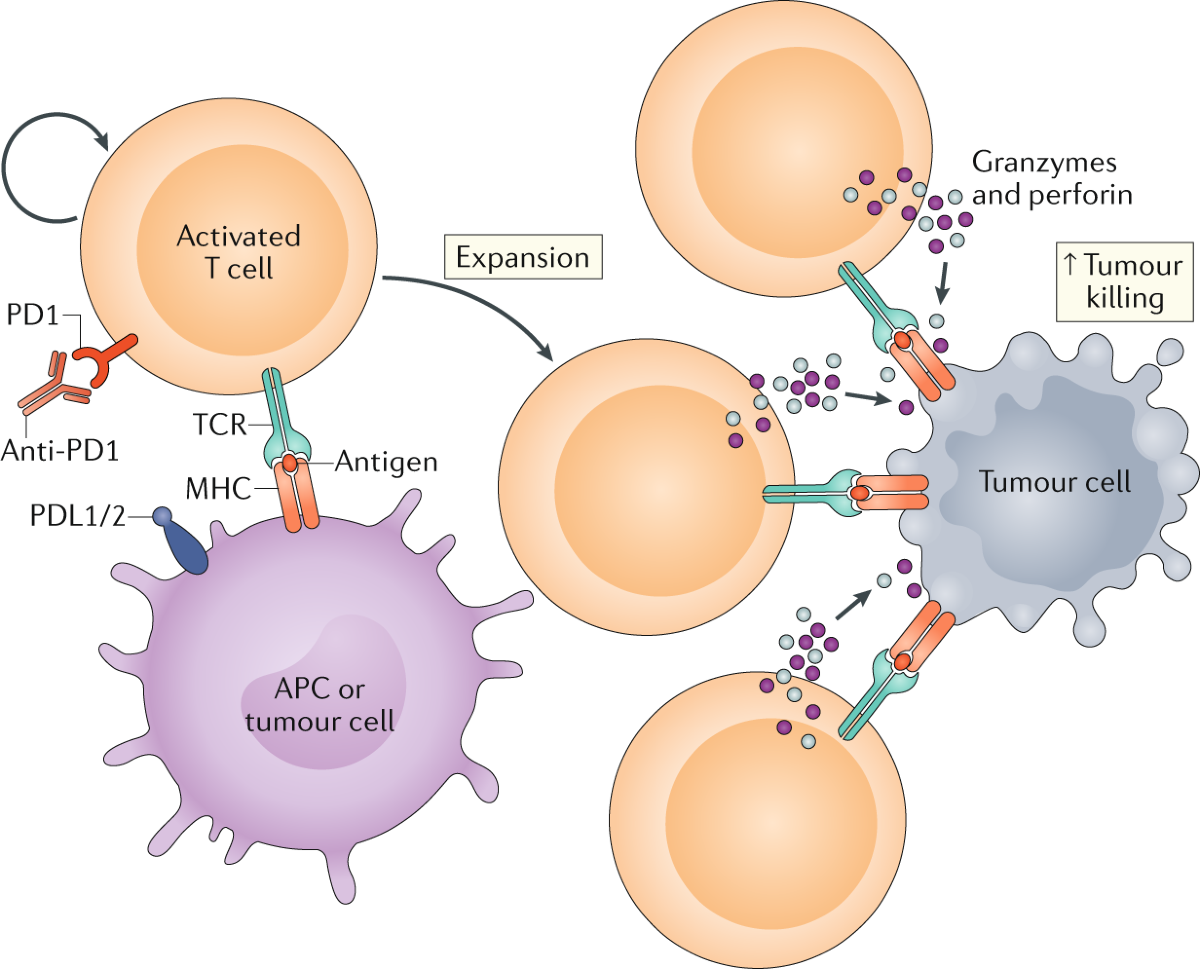
Russian researchers are now applying that same principle to oncology. But instead of coding for a viral protein, the mRNA in a cancer vaccine encodes tumor-specific antigens—unique molecular markers found on cancer cells. When injected, the patient’s own cells produce these antigens, effectively waving a red flag for the immune system. The goal is to mobilize T-cells and other immune defenders to recognize and destroy malignant cells throughout the body.
This approach represents a dramatic departure from conventional cancer therapies such as chemotherapy and radiation, which often attack both healthy and cancerous cells, leading to severe side effects. An mRNA-based therapeutic vaccine, by contrast, promises precision. It aims to target only the tumor, minimizing collateral damage.
Focus on Melanoma and Aggressive Cancers
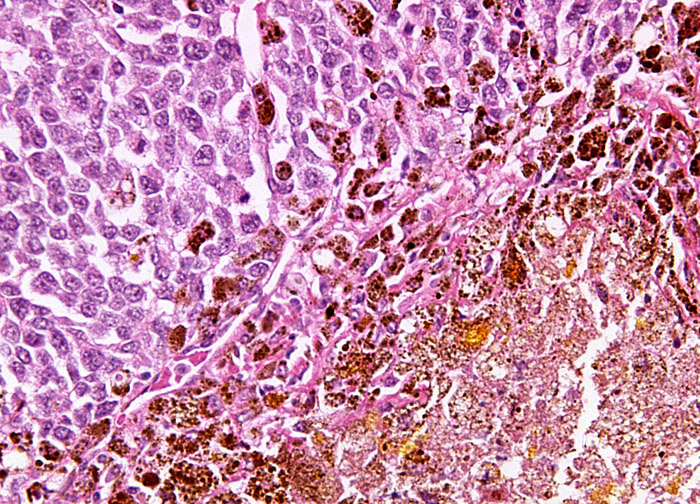
Among the cancers reportedly targeted in early research is melanoma—one of the most aggressive and potentially deadly forms of skin cancer. Melanoma has long posed a challenge due to its ability to spread rapidly to other organs. However, it also has characteristics that make it an appealing candidate for immunotherapy. Because melanoma cells often carry distinct mutations, they can be more visible to the immune system when properly stimulated.
Experimental studies, according to Russian officials, have shown promising results. Some reports suggest high rates of long-term disease-free survival in controlled groups receiving the vaccine. Although full datasets have not yet been widely published in peer-reviewed international journals, the claims have nonetheless sparked considerable interest.
If validated, these results could echo breakthroughs already seen with checkpoint inhibitors and CAR-T therapies, but potentially at a lower cost and with broader scalability. The promise of a vaccine-based strategy is that it could be manufactured more rapidly and customized for individual patients.
Personalized Medicine in Action
One of the most exciting aspects of mRNA cancer vaccines is their compatibility with personalized medicine. No two tumors are genetically identical. By sequencing a patient’s cancer cells, researchers can identify unique mutations and design a custom mRNA vaccine tailored to that individual’s tumor profile.
This personalization could significantly increase treatment effectiveness. Instead of relying on one-size-fits-all chemotherapy regimens, oncologists may one day prescribe a vaccine precisely engineered for a patient’s specific cancer mutations.
Russia’s reported timeline suggests that early deployment could focus on highly controlled clinical settings, potentially targeting patients with limited treatment options. If successful, the implications would extend far beyond melanoma. Researchers envision adapting the technology to treat lung cancer, colorectal cancer, pancreatic cancer, and other forms historically resistant to therapy.
Scientific Caution and the Need for Transparency
Despite the enthusiasm, the global scientific community remains cautiously optimistic. Oncology history is filled with promising breakthroughs that ultimately failed to deliver when subjected to rigorous clinical trials. To move from hope to accepted medical practice, Russia’s cancer vaccine will need to pass through multiple phases of evaluation.
Randomized controlled trials, peer-reviewed publications, and transparent data sharing are essential. International collaboration will likely play a critical role in validating findings and ensuring safety standards are met.
Safety remains a top concern. While mRNA technology has demonstrated a strong safety profile in infectious disease vaccines, cancer patients often have compromised immune systems. Researchers must carefully evaluate potential inflammatory responses, autoimmune risks, and long-term outcomes.
Moreover, large-scale manufacturing consistency must be proven. Personalized vaccines require rapid sequencing, production, and quality control—logistical challenges that demand advanced infrastructure.
A Potential Paradigm Shift
If the vaccine proves safe and effective, it could redefine the global fight against cancer. Instead of viewing cancer as an unstoppable force requiring increasingly aggressive treatment, the medical world may begin to treat it as a manageable condition—something the immune system can be trained to control.
This would represent a paradigm shift comparable to the introduction of antibiotics in the 20th century or the development of antiviral therapies for HIV. Diseases once considered terminal could become chronic, controllable conditions.
For patients and families, the emotional implications are profound. A cancer diagnosis has long carried fear and uncertainty. The prospect of a vaccine that empowers the body to fight back offers a different narrative—one rooted in resilience and biological intelligence.
Global Implications and Competition
The race to develop effective cancer vaccines is not limited to Russia. Laboratories in the United States, Europe, and Asia are also advancing similar platforms. The announcement from Moscow may intensify global competition, accelerating innovation across borders.
Such competition, if guided by ethical collaboration, could ultimately benefit patients worldwide. Shared scientific knowledge and cross-border trials could speed regulatory approvals and expand access.
Geopolitical tensions, however, add complexity. International trust and data transparency will be crucial in ensuring that medical progress remains separate from political narratives. In the realm of health, cooperation often saves more lives than rivalry.
The Road Ahead
Even under optimistic projections, widespread availability will not happen overnight. Regulatory approvals, scaling production, and integrating the vaccine into standard oncology practice will require time.
Still, the momentum is undeniable. mRNA technology has already proven its adaptability. The question now is whether it can fulfill its promise in one of medicine’s most challenging frontiers.
If Russia’s reported progress withstands scientific scrutiny, 2026 could be remembered as the year oncology entered a new era. A future where personalized cancer vaccines complement surgery, chemotherapy, and immunotherapy may soon be within reach.
Hope Tempered with Evidence
In science, hope must always walk alongside evidence. The excitement surrounding Russia’s cancer vaccine reflects humanity’s deep desire to conquer cancer once and for all. Yet rigorous clinical validation will determine whether this breakthrough becomes a milestone or a footnote.
For now, the world watches with cautious optimism. The promise of training the immune system to defeat cancer is no longer science fiction—it is a rapidly evolving scientific endeavor.
Should the data confirm the claims, we may be witnessing the dawn of a transformative chapter in medicine—one where cancer is no longer a looming shadow but a challenge met with precision, innovation, and renewed hope.