Rising Tensions in the Strait of Hormuz: Naval Mines, Global Oil, and a High-Stakes Standoff
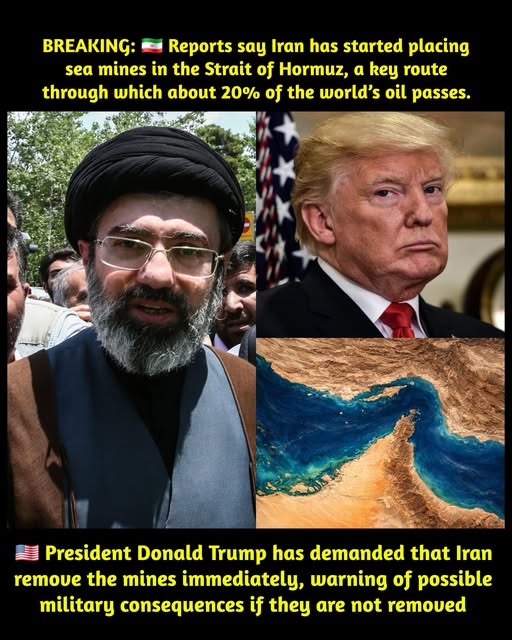

The narrow waters of the Strait of Hormuz have once again become the center of global attention after recent intelligence reports suggested that Iran may have begun deploying a limited number of naval mines in the critical shipping corridor. This strategic waterway, connecting the Persian Gulf with the Gulf of Oman, carries roughly 20% of the world’s daily oil supply, making it one of the most important energy chokepoints on Earth.
Any disruption here—no matter how small—can ripple across global markets within hours. Tankers carrying crude oil and liquefied natural gas pass through the strait every day, linking Middle Eastern energy producers with markets in China, India, Japan, South Korea, and Western economies. For decades, military strategists have warned that instability in this narrow maritime corridor could trigger a worldwide energy shock.
Intelligence Reports and Mine Deployment
According to U.S. defense officials, intelligence assessments indicate that Iranian forces may have begun placing a small number of naval mines in strategic areas of the strait. The suspected operation reportedly involves fast attack boats, which can quietly transport and deploy explosive devices along shipping routes.
These vessels are often associated with the naval branch of the Islamic Revolutionary Guard Corps, commonly known as the IRGC Navy. Unlike conventional naval fleets that rely on large warships, the IRGC has long focused on asymmetric maritime tactics—including swarm boats, drones, coastal missile batteries, and naval mines.
Naval mines are particularly dangerous because they are relatively inexpensive yet highly disruptive weapons. A single mine detonating beneath a tanker could halt traffic through the strait, force shipping companies to suspend routes, and trigger a chain reaction of economic consequences worldwide.
However, officials emphasize that the exact number of mines deployed remains unclear, and intelligence assessments are still evolving. Some analysts believe the activity may be intended as a strategic signal rather than an immediate attempt to block shipping.
U.S. Response and Military Presence
The United States has responded quickly to the reports. According to military sources, American naval forces operating in the region have already destroyed several Iranian vessels suspected of participating in mine-laying operations.
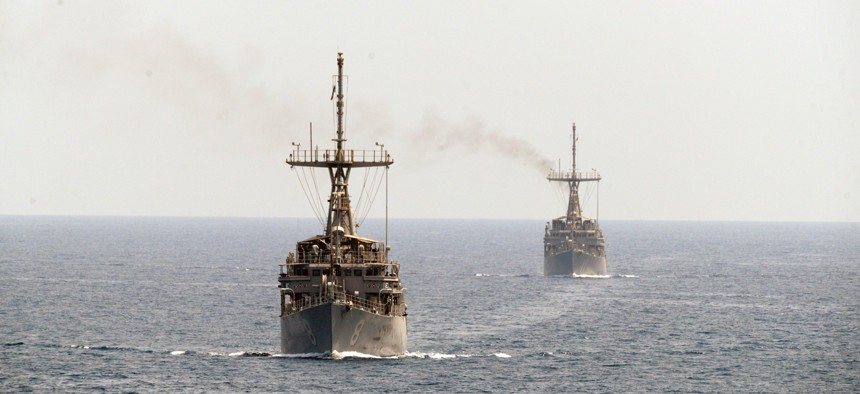
The United States Navy has also increased patrols in the area, reinforcing protection for commercial shipping lanes. Minesweeping ships, surveillance aircraft, and additional warships have reportedly been deployed to ensure that the strait remains open.
At the political level, Donald Trump issued a direct warning to Tehran. The U.S. president demanded that Iran immediately remove any naval mines from the strait and cautioned that serious military consequences could follow if international shipping is threatened.
American officials stress that the freedom of navigation through the Strait of Hormuz is a core national security priority, not just for the United States but also for the global economy.
Why the Strait Matters So Much
The strategic importance of the Strait of Hormuz cannot be overstated. At its narrowest point, the waterway is only about 21 miles (34 kilometers) wide, yet it serves as the primary export route for several of the world’s largest oil producers.
Countries including Saudi Arabia, Iraq, Kuwait, and the United Arab Emirates rely heavily on the strait to move crude oil to international markets.
Every day, dozens of massive tankers carrying millions of barrels of oil navigate the narrow channel. Even a temporary closure—or the perception of risk—can send energy markets into turmoil.
Historically, the strait has experienced multiple periods of tension. During the Iran–Iraq War, the region saw the so-called “Tanker War,” when both sides attacked oil shipping in the Gulf. Naval mines were widely used during that period, damaging several vessels and forcing international naval escorts to protect commercial traffic.
Because of this history, even rumors of mine deployments are taken extremely seriously by military planners and energy traders.
Economic Impact and Oil Prices
Financial markets respond quickly to geopolitical risks involving the Strait of Hormuz. Oil traders closely monitor any developments in the region because even a minor incident could interrupt supplies.
If shipping were partially disrupted, analysts say global oil prices could rise sharply within days, potentially affecting gasoline prices, transportation costs, and manufacturing worldwide.
For countries that depend heavily on imported energy, such as Japan and South Korea, a prolonged disruption could threaten national energy security.
Insurance companies may also raise shipping premiums for tankers traveling through the strait, further increasing the cost of global energy supplies.
Strategic Messaging and Power Projection
Some experts believe Iran’s alleged mine deployment may be intended primarily as strategic messaging rather than an immediate blockade attempt. By demonstrating the ability to threaten the strait, Tehran can remind global powers of its influence over a critical chokepoint.
Iranian military doctrine has long emphasized asymmetric deterrence. Instead of trying to match larger navies ship-for-ship, Iranian forces rely on tactics that exploit geography and surprise—such as mines, missiles, and fast attack craft.
This strategy aims to make any potential military confrontation extremely costly for adversaries.
A Dangerous Flashpoint
Despite these strategic calculations, the situation remains extremely sensitive. Naval mines pose a unique danger because they can remain hidden underwater and detonate without warning. Clearing them requires specialized minesweeping operations, which can take time and expose military vessels to additional risks.
If tensions escalate further, the presence of mines could increase the chances of miscalculation or accidental conflict between forces operating in the region.
Several international navies—including those from United Kingdom and France—have previously participated in maritime security missions designed to safeguard shipping in the Gulf.
Any coordinated response would likely involve multiple countries working together to ensure that the strait remains open.
What Happens Next?
For now, the world is watching closely. Intelligence agencies are continuing to monitor the situation, while naval forces remain on high alert.
The key question is whether the reported mine deployments represent a temporary show of force or the beginning of a more serious effort to challenge international shipping.
What is clear is that the Strait of Hormuz remains one of the most critical strategic flashpoints in the global energy system. A single incident in these narrow waters could have consequences far beyond the Middle East, affecting markets, diplomacy, and security around the world.
As tensions continue to evolve, maintaining stability in this vital maritime corridor will remain a top priority for governments and energy markets alike.