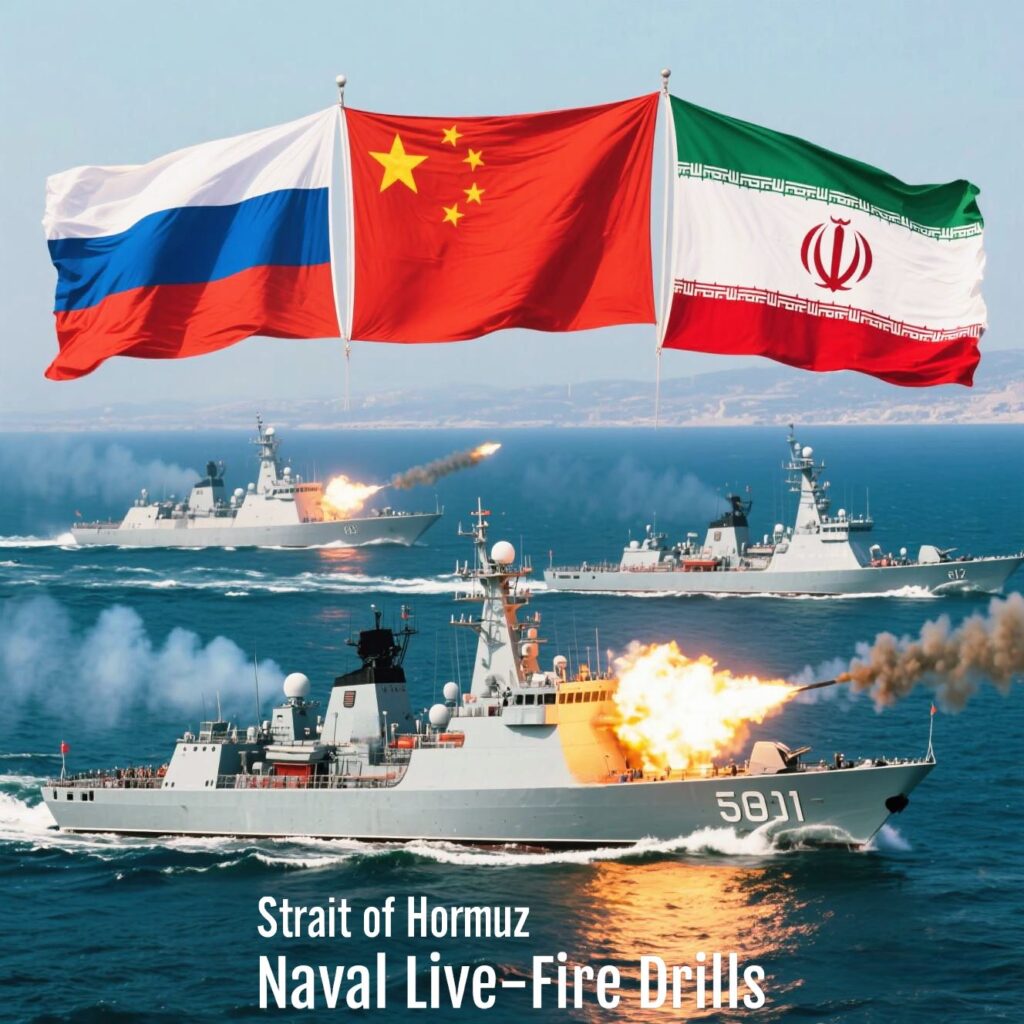
🚨 Iran Unveils Underwater Missile Tunnels Near the Strait of Hormuz: A Strategic Signal to the World
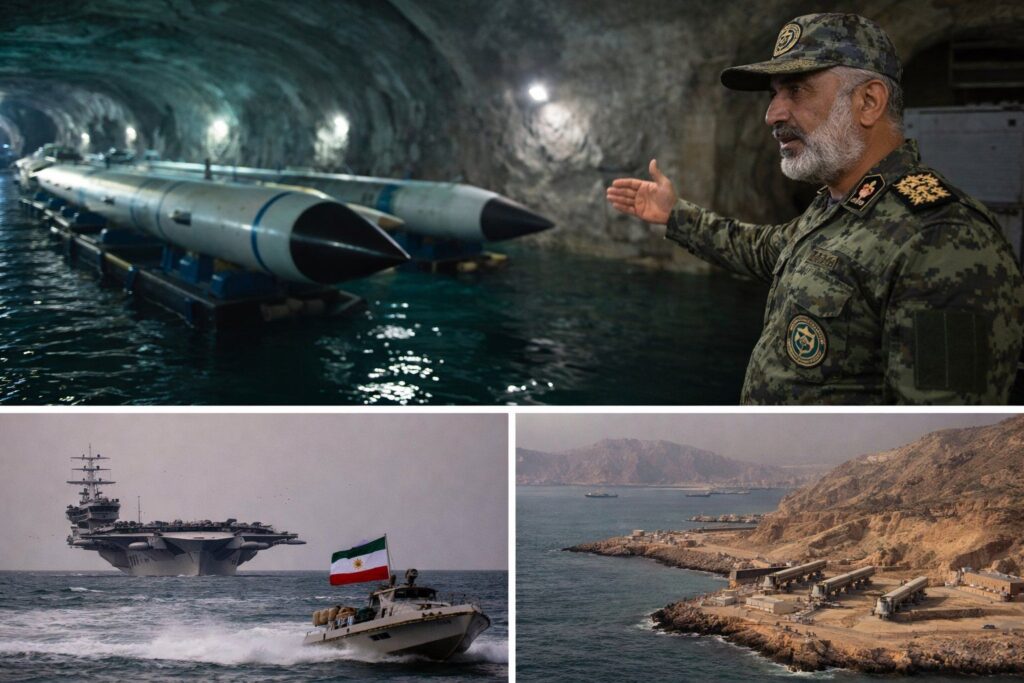
Iran has once again reshaped the strategic conversation in the Middle East by unveiling underwater missile tunnels near the Strait of Hormuz, one of the most critical maritime chokepoints on the planet. According to statements from the Islamic Revolutionary Guard Corps (IRGC) Navy, these facilities house cruise missiles with ranges exceeding 1,000 kilometers, specifically positioned to counter U.S. and allied naval forces operating in the Persian Gulf and the Sea of Oman. Alongside the revelation came a stark warning: if Iran is attacked, the security of the Strait of Hormuz “cannot be guaranteed.”
This announcement is not mere theater. It is a carefully calibrated strategic message—aimed at Washington, regional rivals, global energy markets, and international shipping powers—that Iran retains the capability to disrupt the global economy if its core security is threatened.
The Strait of Hormuz: The World’s Most Dangerous Bottleneck
The Strait of Hormuz is the narrow maritime artery through which roughly 20–25% of the world’s traded oil and a significant portion of global LNG flows daily. At its narrowest point, the strait is only about 33 kilometers wide, with shipping lanes even tighter. Any sustained disruption—whether through mining, missile strikes, or naval confrontation—would immediately spike global energy prices and ripple through financial markets.
Iran’s geography gives it a natural advantage here. Its long coastline along the northern edge of the strait, combined with mountainous terrain and now submerged missile infrastructure, makes it uniquely positioned to contest control of this passage without needing to dominate it outright. Iran does not need to “close” Hormuz; it merely needs to make transit uncertain, risky, and expensive.
Underwater Missile Tunnels: A New Layer of Asymmetric Warfare
The unveiling of underwater missile tunnels represents a significant evolution in Iran’s long-standing asymmetric naval doctrine. Traditionally, Iran has relied on fast attack boats, naval mines, drones, coastal missile batteries, and swarming tactics to offset the overwhelming conventional superiority of the U.S. Navy.
Submerged or semi-submerged missile tunnels add a new and dangerous layer to this strategy:
- Survivability
Underwater facilities are far more difficult to detect and destroy preemptively. Hardened against airstrikes and cruise missile attacks, these tunnels complicate any attempt at a “decapitation strike” against Iran’s coastal defenses. - Second-Strike Capability
Even if Iran’s above-ground missile sites were neutralized, underwater launch systems could survive and retaliate, reinforcing Iran’s deterrence posture. - Ambiguity and Uncertainty
The mere existence of such tunnels forces adversaries to assume that any approach to Hormuz is under constant threat, raising insurance costs and operational risks for both military and civilian vessels. - Psychological Impact
Deterrence is not just about destruction—it is about perception. Hidden underwater missile networks amplify uncertainty, which is often more destabilizing than visible force.
The Missiles: Range, Reach, and Intent
The IRGC Navy claims that the cruise missiles deployed in these tunnels have ranges exceeding 1,000 kilometers, placing not only U.S. naval assets in the Gulf at risk, but also bases and ships operating deep into the Sea of Oman and the northern Indian Ocean.
Such range matters for three reasons:
- Expanded Engagement Envelope: U.S. carrier strike groups can no longer assume safety by operating farther from Iranian shores.
- Anti-Access/Area Denial (A2/AD): Iran is steadily building a layered A2/AD bubble designed to complicate U.S. freedom of maneuver.
- Regional Signaling: Gulf states hosting U.S. bases are indirectly reminded that any conflict will not remain localized.
While Iran’s missiles may not match U.S. systems in precision or networking, quantity, concealment, and geographic advantage compensate for technological gaps.
A Direct Message to the United States
This unveiling is fundamentally aimed at Washington. It comes amid ongoing tensions over Iran’s nuclear program, U.S. sanctions, Israeli threats of preemptive strikes, and increased Western naval presence in the region.
Iran’s message is clear:
- There will be no clean, limited war.
- Any attack on Iran will escalate horizontally, affecting shipping, energy markets, and regional stability.
- U.S. naval superiority does not guarantee control of Hormuz.
The IRGC Navy’s warning that Hormuz security “cannot be guaranteed” if Iran is attacked is not a threat of immediate closure—it is a declaration of conditional deterrence. Iran is signaling restraint under normal circumstances, while making clear that restraint has limits.
Implications for Global Energy Markets
Energy markets are hypersensitive to instability in the Gulf. Even a brief disruption—or the credible threat of one—can cause oil prices to surge by double digits within days. Insurance premiums for tankers would skyrocket, rerouting would increase costs, and strategic reserves would come under pressure.
For energy-importing nations across Asia, including China, India, Japan, and South Korea, the stakes are enormous. These countries rely heavily on Gulf energy flows and have little appetite for conflict in Hormuz. Iran’s move thus indirectly pressures these nations to discourage escalation and maintain diplomatic channels.
In this sense, Iran’s deterrence strategy extends beyond military targets—it reaches directly into the calculations of global economic powers.
Regional Reactions: Gulf States and Israel
For Gulf Arab states, Iran’s announcement is deeply unsettling. Many have invested heavily in missile defense systems and naval modernization, yet underwater missile tunnels are difficult to counter. While recent years have seen cautious diplomatic thawing between Iran and some Gulf neighbors, this development reinforces the reality that any regional war would unfold in their immediate vicinity.
Israel, meanwhile, will view the announcement through the lens of its long-standing concerns over Iran’s missile and nuclear capabilities. While Israel does not operate heavily in Hormuz, it understands that Iranian deterrence in the Gulf indirectly constrains U.S. and allied freedom of action—potentially limiting support during a wider regional conflict.
Strategic Messaging, Not Immediate Escalation
It is important to note that Iran did not unveil these tunnels during active hostilities. This was a deliberate peacetime disclosure, suggesting that the objective is deterrence rather than provocation. Iran wants its adversaries to factor these capabilities into their planning long before any missiles are launched.
This aligns with Iran’s broader strategy: avoid direct war, raise the cost of confrontation, and ensure that any attack on Iran becomes a global problem, not a bilateral one.
A Broader Pattern: Iran’s Evolving Military Doctrine
The underwater missile tunnels are not an isolated development. They fit into a broader pattern that includes:
- Long-range drones and loitering munitions
- Precision-guided ballistic and cruise missiles
- Distributed and hardened infrastructure
- Proxy and partner forces across the region
Together, these capabilities form a multi-domain deterrence architecture designed to compensate for Iran’s lack of air superiority and economic constraints.
Iran is not trying to match the United States ship-for-ship or plane-for-plane. Instead, it seeks to deny dominance, disrupt planning, and impose strategic hesitation.
Conclusion: Deterrence Through Uncertainty
Iran’s unveiling of underwater missile tunnels near the Strait of Hormuz is a calculated escalation in messaging, not in violence. It reinforces a core reality of modern conflict: power is no longer measured solely by visibility or size, but by survivability, ambiguity, and economic leverage.
By embedding long-range cruise missiles beneath the waters of one of the world’s most vital chokepoints, Iran has reminded the international community that Hormuz remains fragile—and that its stability is inseparable from Iran’s security perceptions.
🚨 The warning is unmistakable:
Peace in the Gulf depends not just on naval patrols, but on restraint.
If that restraint collapses, the consequences will extend far beyond the Middle East—reaching oil markets, global trade, and geopolitical balance itself.