A River, a Night, and a Hero: How Sixteen-Year-Old Corion Evans Saved Four Lives and Reminded the World What Courage Looks Like
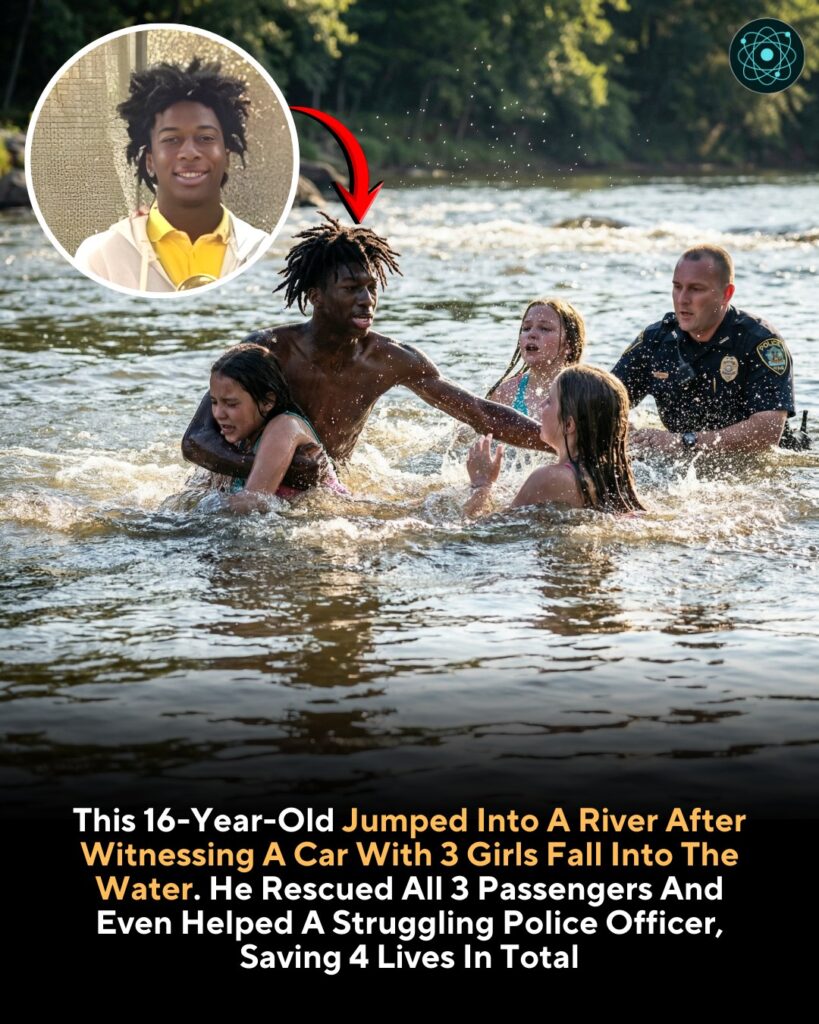
The Pascagoula River is usually quiet at night. Its dark water moves steadily beneath the stars, carrying the sounds of insects, wind, and distant traffic. On most evenings, it is a place of calm reflection—a boundary between land and water, between motion and stillness. But on one unforgettable night, that calm was shattered, and the river became the stage for an act of bravery so extraordinary that it would echo far beyond its banks.
Sixteen-year-old Corion Evans was not looking to be a hero. He was not wearing a uniform, carrying rescue gear, or expecting danger. He was simply there when fate intervened—and when it did, he chose courage without hesitation.
That choice saved four lives.
The Moment Everything Changed
It happened in an instant. A car, carrying three passengers, lost control and plunged into the Pascagoula River. Metal met water with a violent crash, and the vehicle disappeared beneath the surface, swallowed by darkness and panic. Inside the car, fear surged as water rushed in. Time, already scarce, seemed to evaporate.
For bystanders, moments like these can freeze the body and the mind. Shock paralyzes. Fear whispers reasons to stay back, to wait, to hope someone else will act.
But Corion Evans didn’t freeze.
He ran.
No Pause. No Calculation. Just Action.
Without stopping to weigh the risks, without wondering if help was coming, Corion dove straight into the river. The water was deep, dark, and unforgiving. Visibility was low. The current was unpredictable. And yet, he swam toward the sinking car with one goal: get them out alive.
One by one, he reached the trapped passengers. He pulled them from the water, guiding them to safety with strength and urgency far beyond his years. Each rescue demanded breath control, endurance, and the ability to stay calm in chaos—skills that many trained adults struggle to maintain under pressure.
But Corion didn’t stop after saving the three passengers.
That night wasn’t finished asking for courage.
When the Rescuer Needed Rescuing
As emergency responders arrived, a police officer entered the water to continue the rescue efforts. But the river, already proven dangerous, claimed another victim—not in tragedy, but in struggle. The officer began to have difficulty staying afloat.
For most people, that would have been the breaking point. One rescue is heroic. Three is extraordinary. Four feels impossible.
Yet Corion Evans saw the danger and made the same decision he had already made once that night.
He went back in.
With exhaustion setting in and adrenaline wearing thin, the teenager helped the officer reach safety. In that moment, Corion was no longer just reacting—he was leading. He was protecting someone who had sworn to protect others.
By the end of the night, four lives were saved, and every one of them could be traced back to the courage of a sixteen-year-old who refused to stand by.
Bravery Without a Script
What makes Corion’s actions so powerful isn’t just the physical feat—it’s the absence of calculation. He didn’t ask who those people were. He didn’t wait for instructions. He didn’t consider recognition or reward.
He saw danger.
He saw people in need.
And he acted.
In a world often dominated by headlines of division, cruelty, and indifference, Corion’s story feels almost unreal—like a reminder pulled from a better version of ourselves.
But it is real.
And that is why it matters.
A Teenager, a Leader
At sixteen, Corion Evans demonstrated leadership that many spend a lifetime trying to learn. Leadership is often confused with authority, titles, or age. But true leadership reveals itself in moments of crisis—when someone steps forward not because they must, but because they care.
Corion didn’t command anyone. He didn’t give orders. He led with action.
He showed that leadership is not about standing above others—it’s about stepping into danger so others don’t have to.
Risking Everything for Strangers
Perhaps the most profound element of this story is the personal risk involved. Rivers don’t negotiate. They don’t pause. One wrong move, one moment of fatigue, one hidden obstacle—and Corion’s name could have been remembered very differently.
He knew that.
And he went anyway.
That is the definition of selflessness: placing the lives of others on equal footing with your own, even when fear is justified.
In saving others, Corion didn’t diminish himself. He expanded what we believe young people—and people in general—are capable of.
A Ripple That Travels Far
News of the rescue spread quickly. What began as a local emergency became a national story of hope. Across communities and social platforms, people paused—not to argue, not to scroll past—but to reflect.
Parents spoke to their children about courage. Teachers shared the story in classrooms. Strangers felt something shift inside them, a reminder that goodness still moves quietly among us, waiting for the moment it’s needed most.
Corion Evans didn’t just save lives that night.
He restored faith.
Recognition Earned, Not Sought
Praise followed, as it should. Corion has been rightfully recognized as a hero, and his actions have been celebrated by officials and citizens alike. But those who know him describe something even more meaningful: humility.
He didn’t see himself as extraordinary. He saw himself as someone who did what needed to be done.
That humility may be the most heroic trait of all.
What This Story Asks of Us
Stories like Corion’s don’t exist simply to be admired. They challenge us. They ask quiet but powerful questions:
- Would we act if we were there?
- Would we help without knowing the outcome?
- Would we choose courage over comfort?
Not everyone will face a river rescue. But everyone faces moments—small or large—where compassion demands action.
Corion answered that call without hesitation.
A Reminder Written in Water and Courage
The Pascagoula River returned to its quiet flow after that night. The water moved on, carrying no visible trace of what happened. But the lives saved, the families reunited, and the inspiration sparked will not fade so easily.
Sixteen-year-old Corion Evans stood at the edge of danger and stepped forward when it mattered most.
In doing so, he reminded the world that heroism doesn’t always arrive with sirens or capes. Sometimes, it shows up barefoot, breathless, and brave—guided only by the instinct to protect life.
And because of him, four people woke up the next morning with something priceless:
Another chance to live.