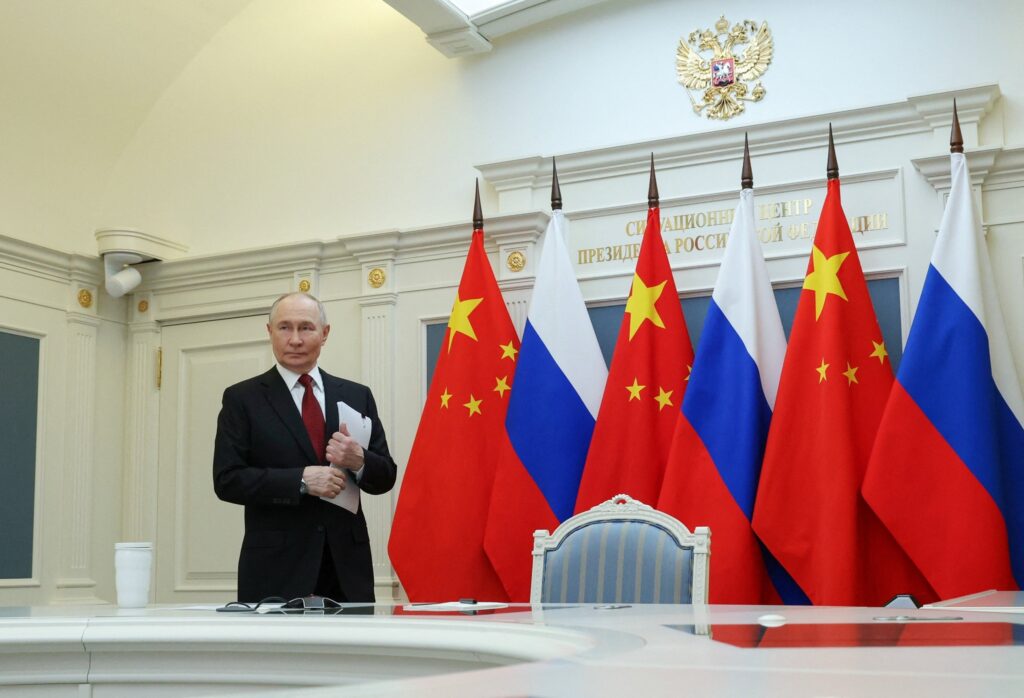
what Do You Think Putin and Xi Really Discussed?
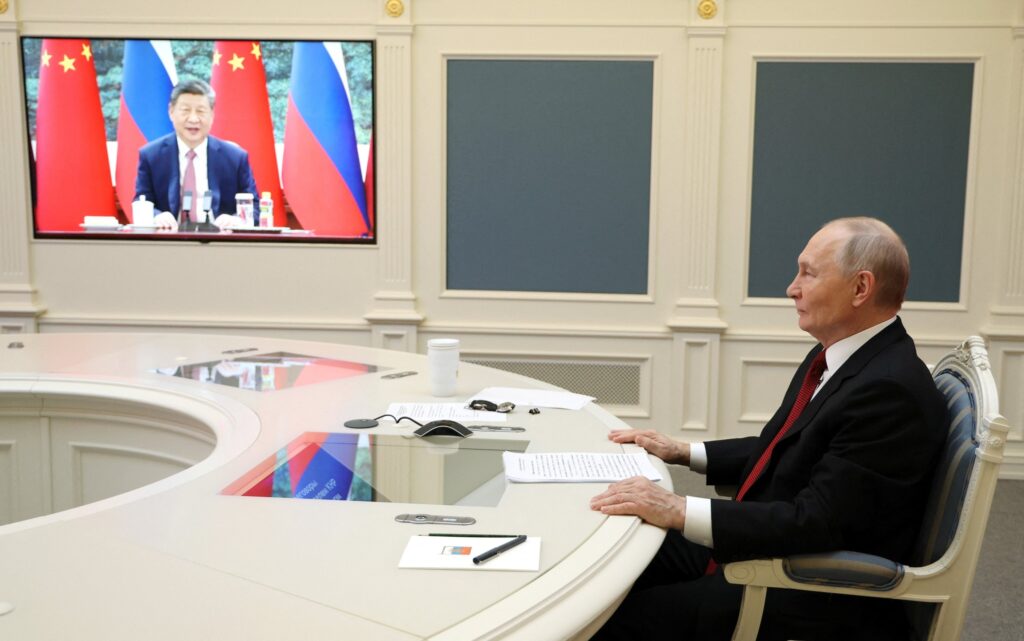
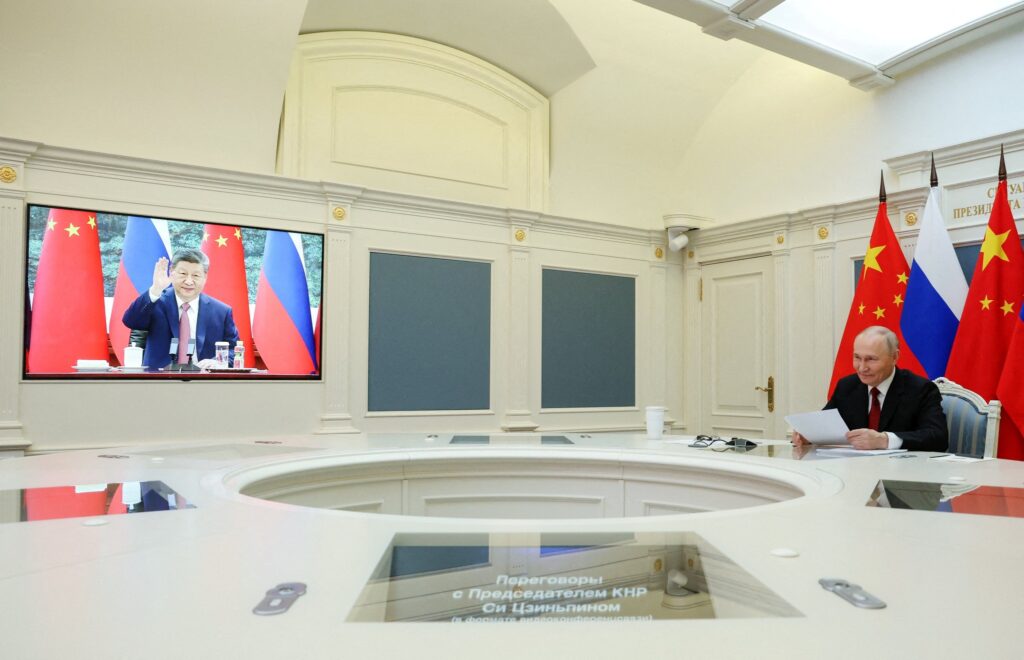
When Russian President Vladimir Putin and Chinese leader Xi Jinping appeared on screens opposite each other for a high-level video conference on Wednesday, the meeting may have looked routine on the surface. Two presidents. Carefully chosen words. Diplomatic smiles. Official readouts filled with familiar phrases: economic cooperation, sovereignty, security.
But behind the formal language and carefully choreographed optics, the conversation likely carried far greater weight — and far deeper implications — for the future of global power.
Because when Putin and Xi talk, the world listens. And when they speak privately, the global order often shifts quietly in the background.
This was not just another diplomatic check-in. It was a strategic moment between two leaders who increasingly see themselves as architects of a world no longer dominated by the West.
A Partnership Forged by Pressure
Russia and China did not arrive at this moment by accident. Their relationship has been shaped by years of mounting pressure from the United States and its allies. Sanctions, tariffs, military alliances, and ideological rivalry have steadily pushed Moscow and Beijing closer together.
For Putin, the stakes are existential. Isolated by sweeping Western sanctions since the Ukraine war, Russia has been forced to reorient its economy, energy exports, and diplomatic priorities eastward. China is no longer just a partner — it is a lifeline.
For Xi, the calculus is more strategic and long-term. China is preparing for a future defined by competition with the United States: economically, technologically, and militarily. Russia, with its vast natural resources, military experience, and shared resentment of Western dominance, is a valuable counterweight.
So when the two leaders spoke this week, the discussion was not merely about cooperation — it was about survival, leverage, and the shape of the next world order.
Economic Cooperation: Beyond Trade, Toward Dependence
Public statements emphasized economic cooperation, but that phrase barely scratches the surface of what is likely unfolding behind closed doors.
Energy at the Center
Energy almost certainly dominated the conversation. Russia remains one of the world’s largest producers of oil and natural gas, while China is the planet’s biggest energy consumer. As Europe distances itself from Russian energy, China has stepped in as a primary buyer — often at discounted prices.
New pipeline routes, expanded LNG contracts, and long-term supply guarantees are likely under discussion. For Russia, these deals ensure steady revenue and economic stability. For China, they provide energy security insulated from Western pressure.
This isn’t just trade — it’s structural dependence. Each new pipeline locks the two economies closer together for decades.
Trade in National Currencies
Another likely topic: reducing reliance on the U.S. dollar. Russia and China have steadily increased trade in rubles and yuan, aiming to weaken Washington’s financial leverage.
In a world where sanctions are wielded as weapons, currency independence becomes a shield. Expect discussions on expanding cross-border payment systems, integrating financial infrastructure, and encouraging other nations to join alternative frameworks.
This is slow, technical work — but its long-term implications are revolutionary.
Sovereignty: A Shared Worldview
Few words resonate more deeply with both leaders than “sovereignty.”
For Putin, sovereignty is invoked to justify Russia’s actions in Ukraine and to reject what he calls Western interference in Russian affairs.
For Xi, sovereignty is central to China’s claims over Taiwan, Hong Kong, Xinjiang, and the South China Sea.
In their conversation, sovereignty likely served as a philosophical bond — a shared rejection of Western norms around human rights, democracy promotion, and international intervention.
Mutual Political Support
China has consistently avoided condemning Russia over Ukraine, framing the conflict as a consequence of NATO expansion. Russia, in turn, has backed China’s “One China” policy without hesitation.
These positions are not symbolic. They are commitments — signals to the world that neither country will abandon the other when pressure mounts.
Behind closed doors, Putin may have sought reassurance that China will continue to resist Western efforts to isolate Russia diplomatically. Xi, meanwhile, may have gauged how firmly Moscow would stand with Beijing should tensions over Taiwan escalate.
Security: The Quiet Core of the Conversation
If economics is the foundation of the partnership, security is its steel frame.
Military Coordination Without an Alliance
Russia and China insist they are not forming a military alliance — but their actions increasingly blur that distinction.
Joint military exercises have grown more frequent and complex, spanning land, sea, air, and cyberspace. Intelligence sharing has deepened. Weapons technology cooperation continues quietly.
During their call, security discussions likely revolved around:
- NATO’s expansion and posture in Europe
- U.S. military presence in the Asia-Pacific
- Missile defense systems
- Cybersecurity and space warfare
Neither leader wants open conflict with the West — but both are preparing for prolonged confrontation.
Learning From War
Xi is almost certainly watching Russia’s war in Ukraine with intense interest. Not to copy it, but to study it.
What works under sanctions?
What fails on the battlefield?
How does Western unity hold — or fracture — under prolonged crisis?
Russia’s experience offers China a real-world case study as Beijing contemplates future scenarios, particularly regarding Taiwan.
A Message to the World — Without Saying It Out Loud
Every Putin-Xi meeting sends a message, even if it is never explicitly stated.
This one likely said: We are not isolated. We are not weak. And we are not backing down.
To Washington and Brussels, it signals that pressure on one will push both closer together.
To the Global South, it offers an alternative pole of power — one that promises investment, infrastructure, and non-interference rather than lectures and sanctions.
To smaller nations caught between blocs, it raises an uncomfortable question: which side of history feels more stable?
Personal Power and Shared Timing
There is also a deeply personal dimension to this relationship.
Putin and Xi are two of the world’s longest-serving leaders. Both have consolidated power, sidelined rivals, and positioned themselves as indispensable to their nations’ futures.
They understand each other in ways Western leaders often don’t. They share skepticism toward liberal democracy, suspicion of popular movements, and belief in strong centralized authority.
Their video conference wasn’t just statecraft — it was leader-to-leader reassurance at a moment of global uncertainty.
What Comes Next?
The real outcomes of the conversation won’t appear in headlines overnight. They will surface gradually:
- A new pipeline announcement
- A joint military drill
- A coordinated UN vote
- A subtle shift in diplomatic language
Each move, small on its own, adds to a larger pattern: the steady construction of a parallel global system.
One where power is multipolar.
Where Western influence is contested.
Where rules are rewritten, not rejected — but redefined.
Final Thought: The Quiet Turning of History
History doesn’t always announce itself with explosions or declarations. Sometimes, it turns quietly — through video calls, strategic agreements, and shared glances between leaders who believe time is on their side.
What Putin and Xi discussed may never be fully revealed. But the direction is clear.
They are preparing for a world where the old certainties no longer hold, where alliances are fluid, and where power is negotiated rather than assumed.
And whether the world is ready or not, that future is already taking shape — one conversation at a time.