Russia says it would launch a full-scale military response if attacked by European forces.
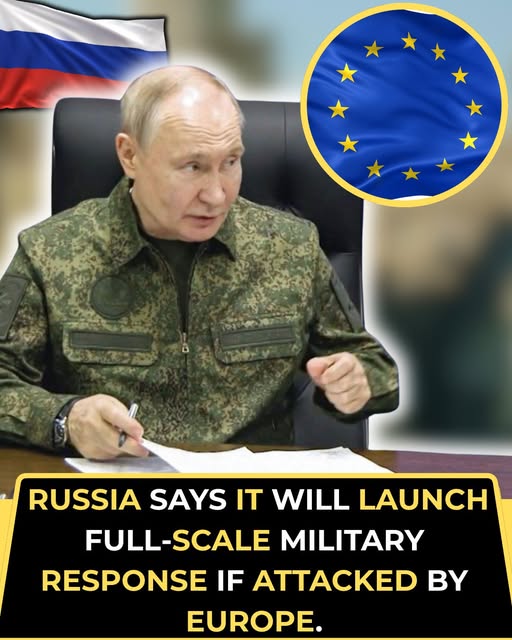
The statement, issued by senior Russian officials including Defense Ministry representatives and Foreign Minister Sergey Lavrov in early February 2026, underscores rising tensions across the region. Moscow framed the warning as a clear deterrence message, asserting that any direct military action by European NATO members—whether through conventional forces, special operations, or support for strikes inside Russian territory—would trigger a proportional and potentially overwhelming response, including the possible use of advanced conventional or strategic weapons.
European governments have not indicated any imminent offensive action against Russia. NATO leaders and EU officials continue to emphasize defensive posture, support for Ukraine within international law, and deterrence without escalation. The alliance has repeatedly stated that it has no intention of engaging in direct combat with Russia and that its activities remain focused on protecting member states and supporting Ukraine’s right to self-defense.
Military rhetoric often escalates during periods of geopolitical strain, particularly amid ongoing conflict in Ukraine, increased NATO exercises near Russian borders, and reciprocal troop deployments. Such statements serve both domestic and international purposes—bolstering national resolve, signaling red lines, and influencing adversary calculations—while rarely signaling immediate intent for offensive action.
Allies and independent observers are urging de-escalation through renewed dialogue, back-channel communications, and confidence-building measures to prevent miscalculation or accidental confrontation. Diplomatic channels typically remain active behind the scenes, even during periods of public hostility, with intermediaries such as Turkey, India, and China facilitating indirect contact.
Analysts are watching closely for changes in troop posture, large-scale military exercises, air or missile deployments, or shifts in nuclear readiness indicators that could signal heightened risk. Markets have shown sensitivity to such rhetoric, with periodic spikes in energy prices, defense stocks, and safe-haven assets when escalation language intensifies.
The situation highlights the fragile balance of regional security in Europe. With conventional forces massed along extended front lines, advanced weapons systems in close proximity, and mutual threat perceptions at historic highs, the margin for error remains narrow. Sustained diplomacy, clear signaling of defensive intent, and restraint on provocative actions are widely seen as essential to preserving stability.
References
Russian Ministry of Defense – Official Statement on Response to Potential NATO Aggression (February 2026)
TASS – Lavrov: Any European attack on Russia would trigger full-scale military response (February 2026)
Reuters – Russia warns of massive retaliation if NATO forces strike (February 2026)
BBC News – Moscow issues stark warning to European NATO members (February 2026)
NATO – Statement on Defensive Posture and Support for Ukraine (February 2026)
Financial Times – Markets react to renewed Russia-NATO rhetoric (February 2026)
The Guardian – Analysts warn of miscalculation risks amid escalating language (February 2026)