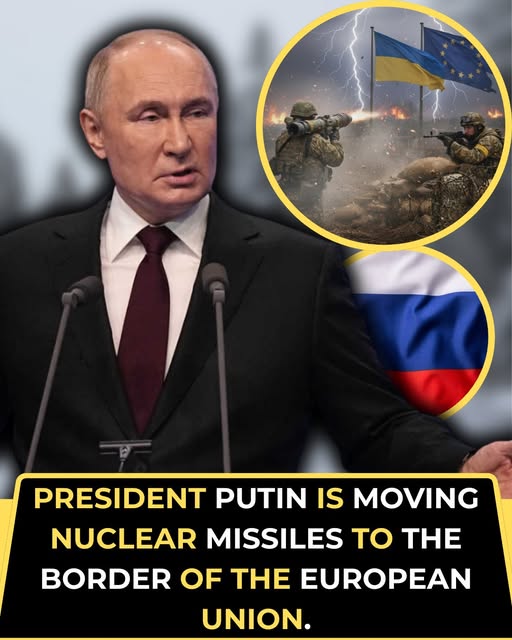
Reports claim President Vladimir Putin is moving nuclear-capable missile systems closer to the European Union’s borders.
Any shift involving strategic weapons immediately raises international concern due to the high stakes involved. According to preliminary intelligence assessments and media reporting, Russia has repositioned Iskander-M short-range ballistic missile units (capable of carrying both conventional and nuclear warheads) and possibly Kalibr cruise missiles or Kinzhal hypersonic systems to forward bases in western Russia and Belarus. The moves are said to include Kaliningrad exclave and areas near the Finnish and Baltic borders.
Russia has previously repositioned missile systems within its territory in response to NATO expansion, missile defense deployments in Poland and Romania, and regional security tensions. Moscow typically frames such actions as defensive deterrence measures—restoring balance after perceived Western provocations, protecting national territory, and ensuring second-strike credibility in a crisis.
At the same time, European leaders, NATO officials, and U.S. defense analysts view deployments near borders as escalatory signals that increase strategic risk, reduce decision time in a crisis, and undermine stability. NATO Secretary General and several alliance capitals have expressed alarm, describing the repositioning as part of a pattern of coercive signaling intended to intimidate and divide the West.
It is important to distinguish between confirmed official military deployments and speculative or preliminary reporting. In matters involving nuclear-capable systems, verified information from defense ministries, satellite imagery analysis, international monitoring bodies (e.g., Open Skies remnants, commercial satellite firms), and official statements is essential before drawing firm conclusions. As of the latest updates, neither the Russian Ministry of Defense nor NATO has issued a full public confirmation of the exact systems, numbers, or nuclear warhead status involved.
Strategic positioning of dual-capable missiles does not automatically signal imminent conflict, but it does intensify geopolitical tension, heighten alert levels, and complicate crisis management. The development adds pressure to ongoing NATO-Russia dialogue channels (limited as they are) and feeds into broader concerns about nuclear signaling in Europe.
References
Russian Ministry of Defence – Statement on Force Posture Adjustments in Western Military District (February 2026)
NATO – Response to Reported Russian Missile Repositioning Near Borders (February 2026)
Reuters – Russia moves nuclear-capable missiles closer to EU borders, sources say (February 2026)
BBC News – Moscow repositions Iskander systems amid NATO tensions (February 2026)
The Guardian – Alarm in Europe over Russian missile movements near Baltic states (February 2026)
Politico Europe – NATO monitors Russian nuclear-capable deployments in Kaliningrad and Belarus (February 2026)