B-2 Spirit Bombers Join Iran Air War, Pummel Underground Missile Caves
March 2, 2026
4
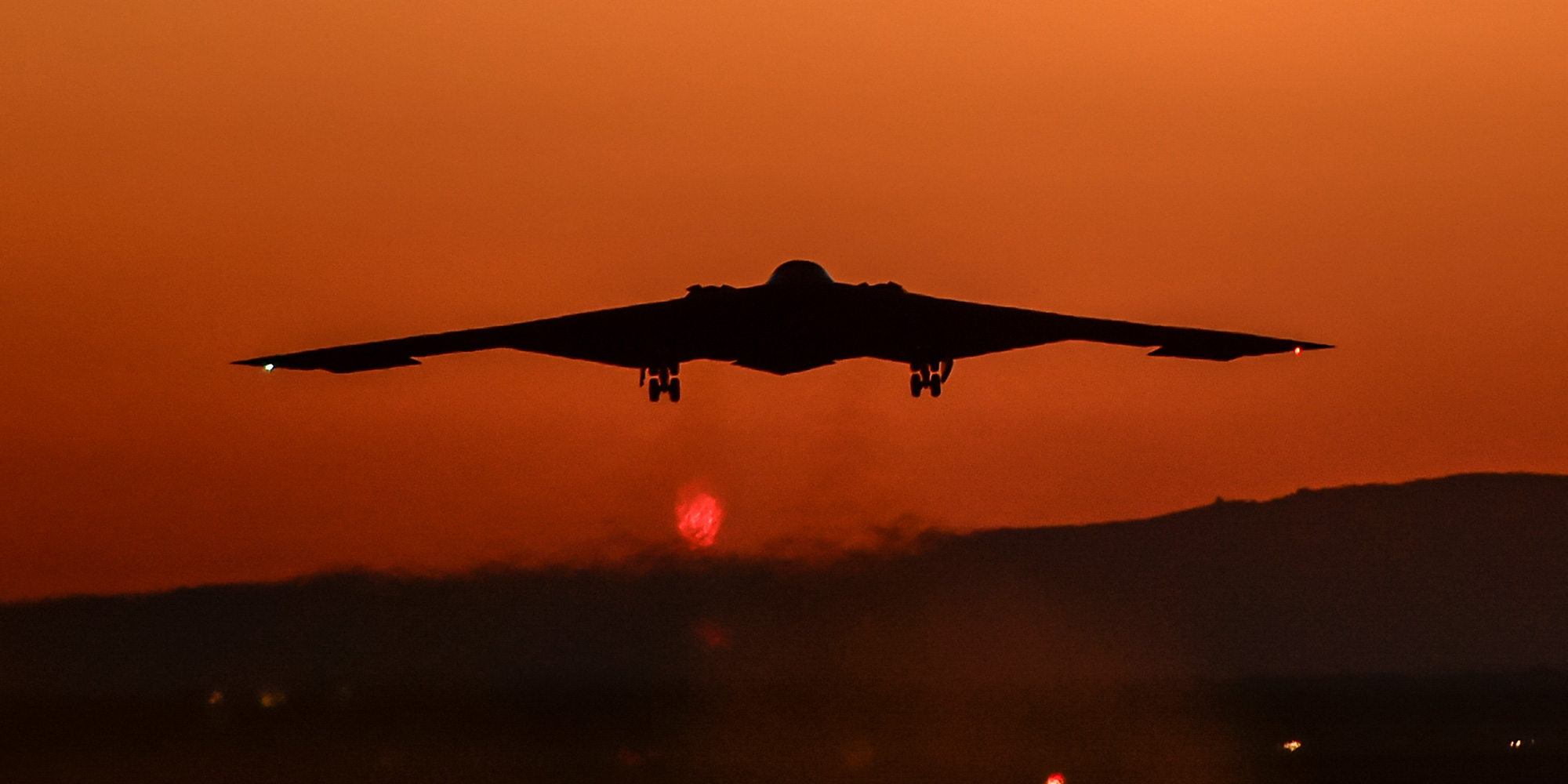
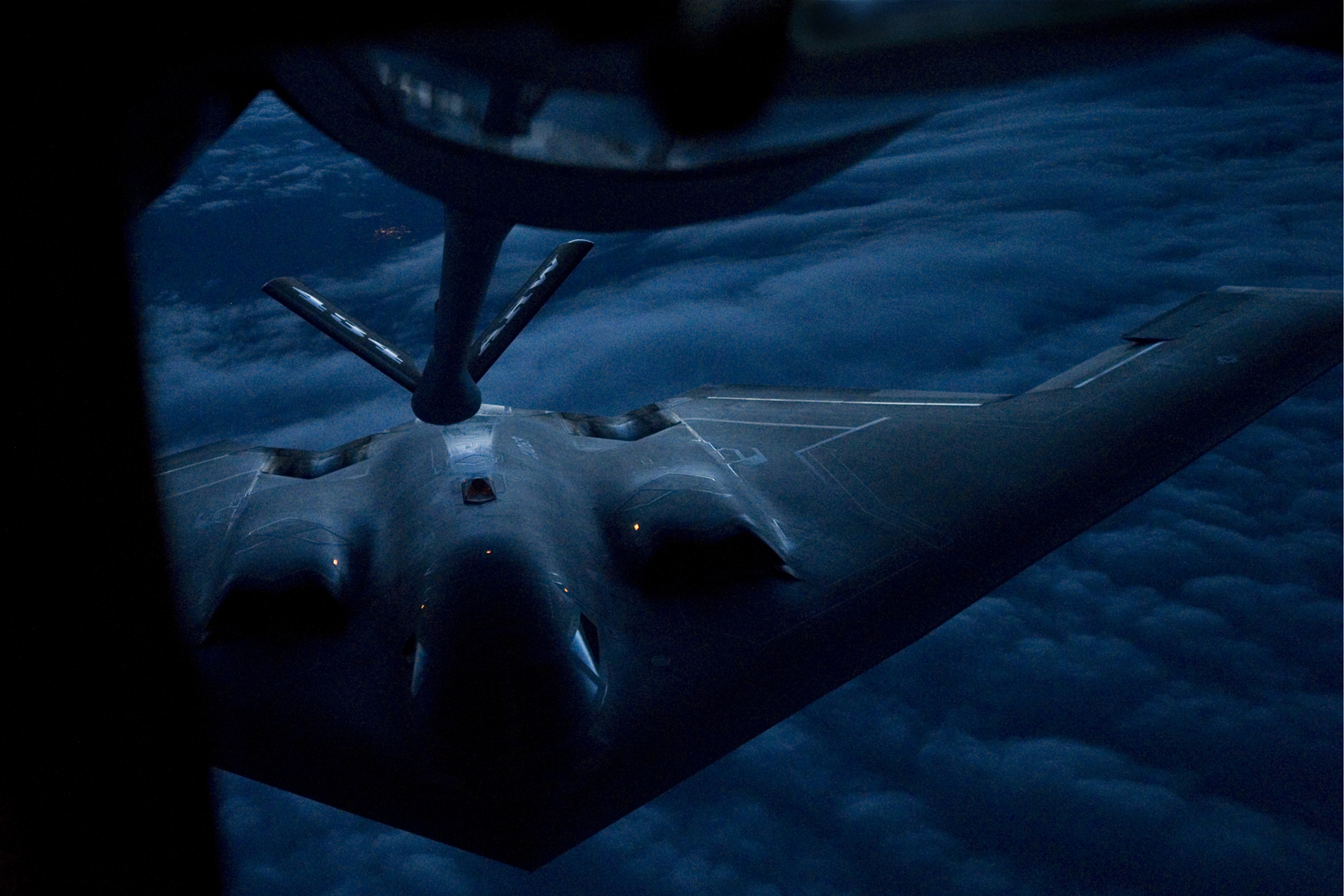
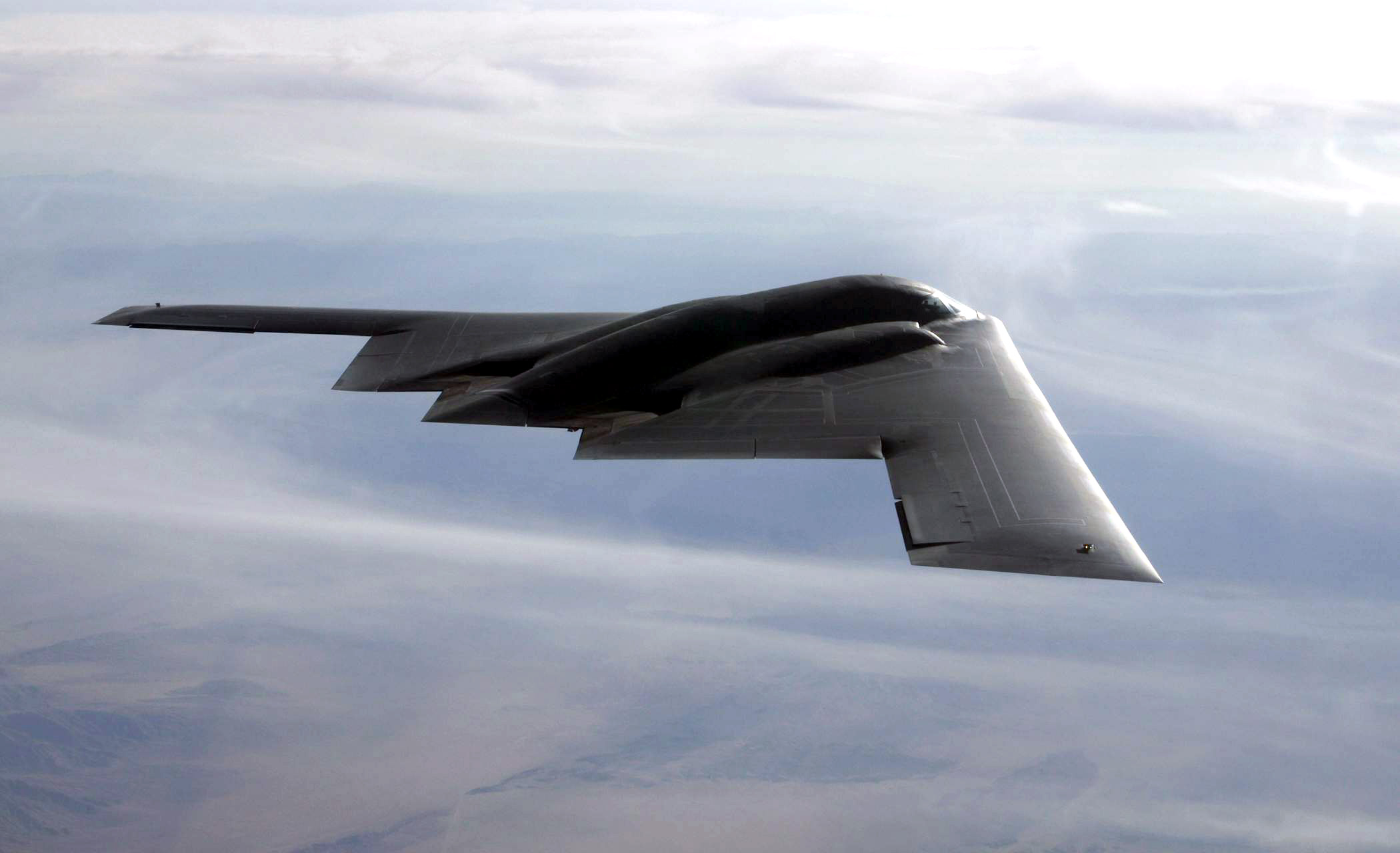
Just as anticipated, America’s most secretive and strategically potent bomber has entered the fight.
Overnight, B-2 Spirit aircraft flew global strike missions from Whiteman Air Force Base in Missouri, crossing continents under cover of darkness before arriving over Iranian airspace in the early morning hours. Their mission: dismantle one of the most hardened and symbolically powerful elements of Iran’s military infrastructure — its underground missile cave complexes.
These weren’t routine bombing runs. They were precision, high-stakes operations aimed at targets buried deep inside mountains.
The Silver Bullet Enters the Arena
Observers had been watching for signs of the B-2’s involvement. Tanker activity over the Atlantic — particularly from the Azores — hinted that something was underway. Refueling tracks appeared without a visible “customer,” suggesting stealth assets were moving through the battlespace unseen.
The logic behind deploying the B-2 was clear.
No other platform can replicate its combination of stealth, range, and payload. A single B-2 can carry up to 80 500-pound JDAMs, or specialized bunker-busting weapons capable of burrowing deep into reinforced rock and concrete. One sortie can dismantle an airfield’s infrastructure. One pass can permanently alter a hardened target set.
And critically, the timing was deliberate.
With Iranian air defenses reportedly degraded and command-and-control networks disrupted from prior waves of strikes, conditions were ideal for stealth bombers to operate with maximum effect. This is often the inflection point in an air campaign — the moment when strategic bombers reshape the battlefield.
Iran’s Missile Caves: Deep, Hidden, and Dangerous


4
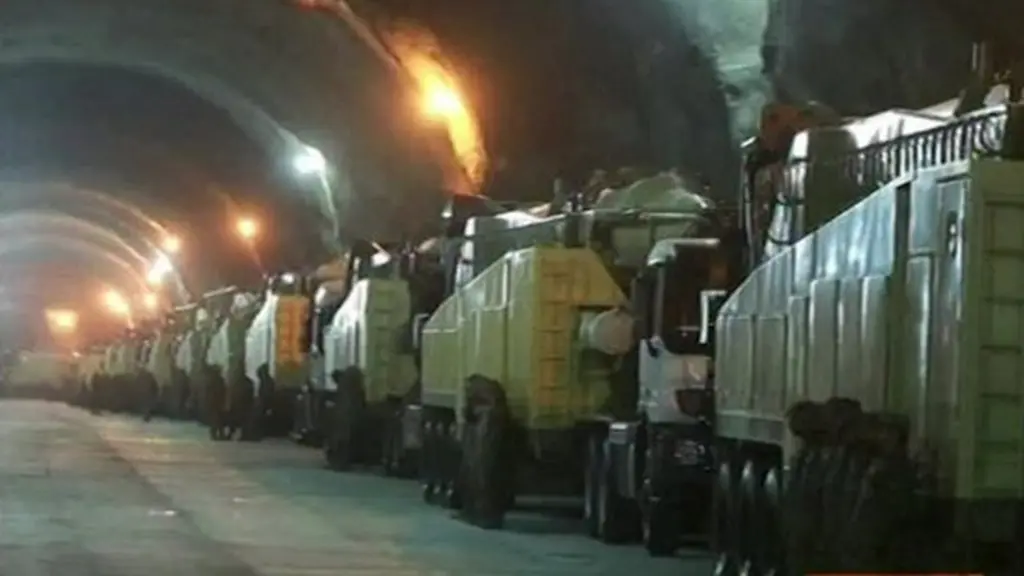
Iran’s missile cave complexes are not ordinary storage depots. Carved into mountains, reinforced with layers of concrete and rock, and designed with compartmentalized chambers that can be sealed off from one another, they represent one of the most challenging target sets in modern warfare.
Some of these facilities are primarily storage hubs for ballistic missiles and launch vehicles. Others are far more sophisticated — capable of launching missiles directly through apertures in their ceilings without the weapons ever leaving the mountain structure.
In certain cases, automated rapid-loading systems enable quick successive launches, turning these caves into concealed firing batteries.
Destroying such complexes outright is extraordinarily difficult. Their internal design requires intricate weaponeering calculations and large quantities of specialized munitions to collapse tunnel networks entirely.
But total destruction isn’t always necessary.
Bottling the Arsenal
Military planners have long understood the key vulnerability of these mountain fortresses: access points.
You don’t have to demolish the entire complex to neutralize it. You only need to seal the entrances — and keep them sealed.
Striking near fortified openings can collapse entry tunnels, trapping missiles and launchers inside. Once blocked, reopening those access points during an active conflict becomes dangerous and slow. With persistent remote sensing and surveillance, any attempt to clear debris can be detected and targeted again.
In effect, the arsenal becomes useless — entombed within its own fortress.
Some cave systems present additional opportunities. In locations where the terrain slopes gradually above the tunnels, penetrator munitions can burrow deep enough to reach the internal chambers themselves. Such strikes not only damage the facility but make reopening it exponentially harder.
This is precisely the kind of complex, high-precision mission set for which the B-2 was built.
The Complicating Factor: Vertical Launch Apertures
There is, however, a critical complication.
Certain Iranian missile caves feature vertical apertures in their ceilings — protected by heavy overhead doors. These openings allow ballistic missiles to be launched from within the mountain, even if external entrances are sealed.
That means simply blocking ground-level access may not fully eliminate launch capability.
The solution? Penetrate the launch bays themselves.
Overhead blast doors can be targeted and destroyed. Precision-guided munitions can collapse launch shafts or detonate within the bays, rendering them inoperable. This requires accuracy, stealth, and deep-penetration capability — again placing the mission squarely in the B-2’s wheelhouse.
In short, if any platform can surgically dismantle these hardened launch nodes, it is America’s stealth bomber force.
Strategic Implications
The prioritization of missile cave complexes signals a clear operational objective: degrade Iran’s ability to threaten regional targets with ballistic missiles.
Missile forces form a core pillar of Iran’s deterrence strategy. By embedding them in hardened mountain facilities, Tehran sought to ensure survivability against air attack.
The introduction of B-2 bombers suggests the campaign has entered a more deliberate and methodical phase — one aimed not just at punishing strikes, but at systematically dismantling Iran’s strategic infrastructure.
This marks a shift.
Earlier waves may have focused on air defenses, command nodes, naval assets, and surface launchers. The B-2 phase targets what lies beneath — the deeply buried backbone of missile operations.
When the Air Campaign Changes
Air wars often evolve in stages:
- Suppress air defenses.
- Disrupt command and control.
- Strike high-value hardened targets.
With stealth bombers now conducting deep-penetration missions, analysts suggest the campaign has reached that third stage.
The psychological dimension should not be underestimated. The B-2 is often referred to as a “silver bullet” for a reason. Its deployment signals seriousness of intent and confidence in operational dominance.
When B-2s appear, it means the gloves are off.
What Comes Next?
While official damage assessments remain limited, the strategic logic is unmistakable. Sealing missile caves, collapsing launch shafts, and neutralizing underground arsenals dramatically alters Iran’s ability to project power during the conflict.
But as history shows, hardened facilities are rarely eliminated in a single night. Re-strikes, monitoring, and sustained pressure are often required.
What is certain is this: the entrance of the B-2 into the air campaign represents a defining moment. It underscores the scale of the operation and the determination to dismantle the most fortified components of Iran’s missile network.
In modern warfare, the battle is not only for territory or airspace — it is for hidden infrastructure buried beneath mountains.
And now, that hidden world is being methodically targeted from 40,000 feet above.