A Divided Europe: Britain Opens Its Bases While Spain Closes the Door

4
In moments of international crisis, alliances are often tested in ways that reveal deep political and strategic differences. The latest tensions surrounding U.S. and Israeli military strikes have done exactly that across Europe. While the United Kingdom ultimately agreed to allow the use of its military facilities, Spain took a dramatically different path—refusing to allow its jointly operated bases to support the operation.
The decision has highlighted a growing divide within Europe over military involvement, international law, and the role European nations should play in global conflicts.
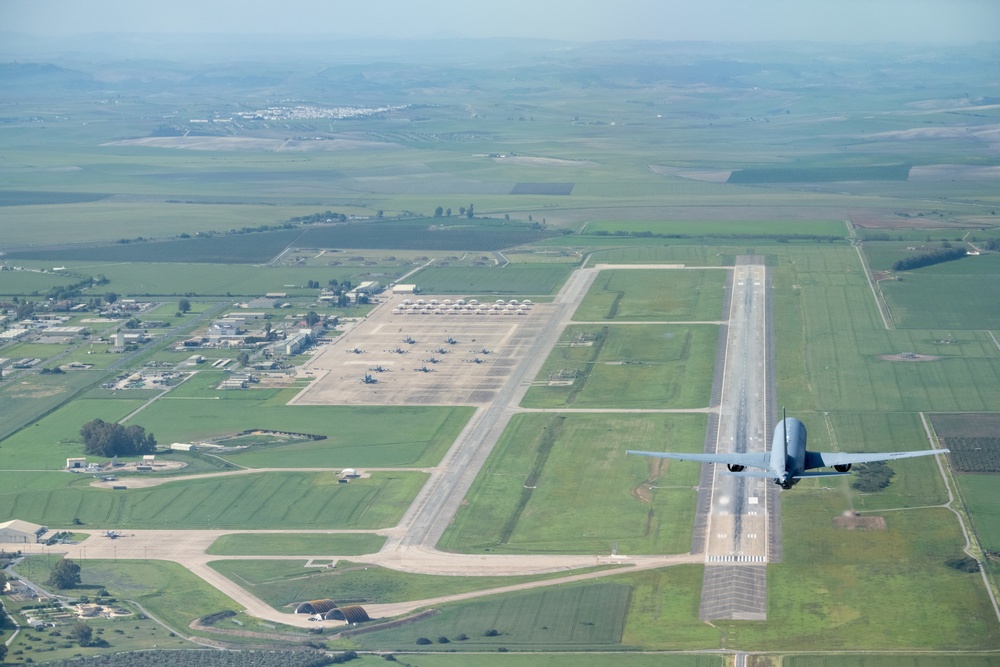
At the center of the controversy are two strategically important installations on Spanish soil: Naval Station Rota and Morón Air Base. Both facilities are operated in cooperation with the United States but remain under Spanish sovereignty—giving Madrid the final say on how they can be used.
And in this case, Spain chose restraint.
Spain Draws a Legal Line



4
Spain’s position was made clear by José Manuel Albares, who confirmed that the bases would not be used for operations that fall outside the framework of the United Nations Charter.
Albares emphasized that although the facilities are jointly operated with the United States, Spanish law and sovereignty govern how they are used. That means any military action supported from Spanish territory must comply with international law as interpreted by Madrid.
Spain’s stance was reinforced by Pedro Sánchez, who had already criticized the U.S.–Israeli strikes as an unjustified and dangerous military intervention.
According to Sánchez, the operation risked escalating tensions in an already volatile region while sidestepping the multilateral diplomatic frameworks that Europe has traditionally supported.
The message from Madrid was clear: Spain would not allow its territory to be used in ways that could violate international law or further inflame global conflict.
Aircraft Departures Spark Questions
Despite Spain’s firm announcement, flight tracking data quickly revealed unusual movement at the two bases.
Within hours of the decision becoming public, reports indicated that approximately 15 U.S. aircraft departed from Rota and Morón. According to publicly available flight monitoring data, at least seven of those aircraft landed at Ramstein Air Base, one of the largest American military hubs in Europe.
The movements appeared to be part of a rapid repositioning effort following Spain’s decision.
While no official statement detailed the exact purpose of the flights, analysts suggested the aircraft may have been relocating to facilities where operational permissions were clearer or already secured.
Ramstein, long considered a logistical nerve center for U.S. operations across Europe and the Middle East, offered an obvious alternative.
The episode demonstrated just how critical access to overseas bases can be during military operations—and how quickly plans must change when political approval shifts.
Britain’s Change of Position
Across the continent, another important decision was unfolding.
The United Kingdom initially hesitated when asked whether its bases could support the operation. The issue quickly became politically sensitive in London, where lawmakers and analysts debated the legal justification and potential consequences of involvement.
Ultimately, the British government authorized the use of its facilities under the justification of “collective self-defense.”
Although the decision was framed as support for allied security obligations, the timing raised questions about the delicate balancing act facing European governments.
Unlike Spain, the UK has historically maintained a closer military alignment with Washington during international crises. That tradition, combined with Britain’s role in NATO and longstanding strategic partnerships, made the decision somewhat predictable—even if it was not immediate.
Still, the contrast between Britain’s eventual approval and Spain’s refusal could hardly have been sharper.
Spain’s Humanitarian Caveat
Spain did not entirely shut the door on cooperation.
Defense Minister Margarita Robles clarified that the bases could still provide assistance under specific circumstances—particularly for humanitarian purposes.
According to Robles, Spanish authorities would allow the facilities to support operations related to:
- Humanitarian aid delivery
- Evacuation missions
- Emergency assistance
But they would not authorize the bases to serve as launching points or logistical hubs for offensive military action connected to the strikes.
This distinction allowed Spain to maintain its commitment to international cooperation while still adhering to its interpretation of international law.
For Madrid, it was a way to walk a tightrope between alliance obligations and domestic political principles.
A Broader European Debate
Spain’s decision has already sparked debate across Europe about how the continent should respond to major military interventions.
Anti-war organizations quickly praised Madrid’s stance and began urging other European governments to follow the same path. Demonstrations and statements from advocacy groups argued that European territory should not be used to support operations they believe could escalate global tensions.
Supporters of Spain’s position argue that strict adherence to international law helps preserve global stability and prevents conflicts from spreading.
Critics, however, say that refusing operational cooperation with key allies could weaken collective security arrangements—particularly at a time when geopolitical tensions are already running high.
The disagreement reflects a deeper question facing Europe today: how closely should European nations align with U.S. military actions when legal interpretations and political priorities diverge?
The Strategic Importance of Overseas Bases
The controversy also highlights the immense strategic value of overseas military installations.
Facilities like Rota, Morón, and Ramstein serve as critical hubs for logistics, intelligence coordination, and rapid deployment. They allow military forces to operate far from their home territory while maintaining supply chains and operational flexibility.
But these bases exist through agreements with host nations, which means political decisions can instantly reshape military planning.
When a host country restricts how a base can be used, commanders must rapidly adjust operations—sometimes relocating aircraft, supplies, or personnel to other locations.
Spain’s decision therefore did more than express a political opinion. It had immediate operational consequences.
A Symbol of Europe’s Strategic Crossroads
The disagreement between Britain and Spain may ultimately represent more than just a policy dispute about one military operation.
It reflects the broader strategic crossroads facing Europe as global power dynamics shift.
Some governments continue to prioritize strong military alignment with Washington and NATO partners, emphasizing deterrence and collective defense.
Others are increasingly emphasizing diplomatic solutions, multilateral institutions, and strict adherence to international legal frameworks.
Both perspectives have deep roots in European political history, and both claim to protect stability in an increasingly unpredictable world.
What Comes Next
Whether Spain’s stance will influence other European countries remains uncertain.
But the episode has already demonstrated that Europe is far from unified when it comes to military intervention.
As tensions continue to unfold internationally, decisions about access to bases, legal frameworks, and alliance obligations will likely become even more significant.
For now, the contrast stands as a powerful symbol: one European ally opening its runways, another closing them.
And in an era of global uncertainty, those decisions can reshape the trajectory of international crises in ways that reach far beyond the bases themselves.