The global financial landscape is undergoing a quiet but powerful transformation. In a move that signals both economic ambition and strategic recalibration, Russia and China have shifted a significant portion of their trade settlements away from the United States Dollar and toward their own national currencies—the Chinese Yuan and the Russian Ruble. While this may appear technical on the surface, the implications run deep, touching everything from global power dynamics to the future of international trade itself.
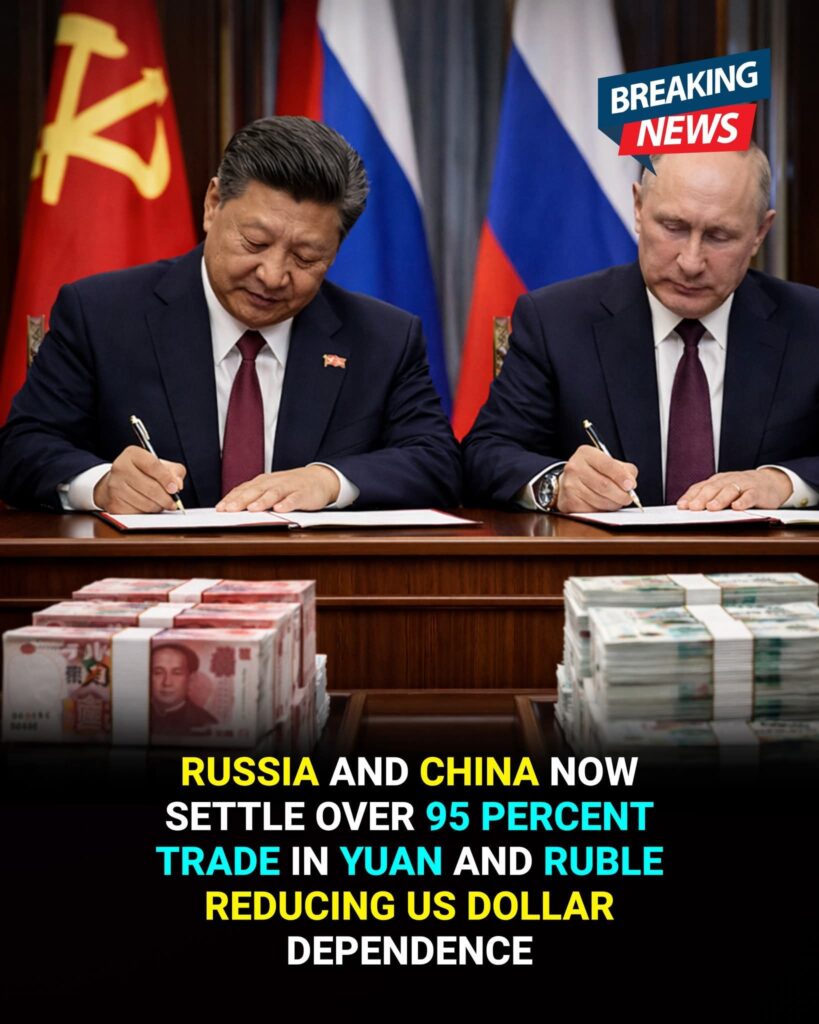
For decades, the U.S. dollar has served as the backbone of global commerce. From oil transactions to international loans, it has been the default currency that connects economies across continents. This dominance has given the United States a unique financial advantage—allowing it to influence global markets and enforce economic policies through sanctions and monetary tools. However, the recent pivot by Russia and China reflects a growing desire to step outside that framework.
At the heart of this transition is a push for financial independence. By conducting trade in yuan and rubles, both countries reduce their exposure to dollar-based systems and the institutions that govern them. This is particularly significant for Russia, which has faced waves of economic sanctions in recent years. Moving away from the dollar allows Moscow to maintain trade flows even under financial restrictions, ensuring economic continuity in an increasingly fragmented geopolitical environment.
China, on the other hand, views this shift as part of a long-term strategy to elevate the yuan’s global standing. As the world’s second-largest economy, China has steadily expanded its financial influence through initiatives like cross-border payment systems and bilateral trade agreements. Settling trade in yuan not only strengthens its currency but also positions Beijing as a central player in shaping the next phase of global finance.
This transition is not happening in isolation. It reflects a broader trend among emerging economies seeking alternatives to dollar dependency. Regional trade blocs, energy partnerships, and multilateral agreements are increasingly exploring local currency settlements. While the dollar remains dominant, its share in global reserves and transactions is gradually facing competition—a subtle but meaningful shift.
Another layer to this transformation involves financial infrastructure. By relying more on their own currencies, Russia and China are also investing in independent payment systems, banking networks, and digital financial platforms. These systems are designed to operate outside traditional Western-controlled frameworks, offering resilience in times of geopolitical tension. In this sense, the move is not just about currency—it’s about building an entirely new financial ecosystem.
The mention of environmental funds adds an interesting dimension to this shift. Both nations are exploring ways to integrate sustainable finance into their economic strategies. By channeling trade and investment through funds aligned with environmental goals, they can simultaneously address global climate concerns while reinforcing domestic financial control. This dual-purpose approach reflects a modern understanding of economic power—where sustainability and sovereignty go hand in hand.
However, the transition is not without challenges. The dollar’s dominance is deeply entrenched, supported by decades of trust, liquidity, and global acceptance. For the yuan and ruble to compete on the same level, they must overcome hurdles related to transparency, market confidence, and international adoption. Investors and institutions often prefer stability, and shifting away from a familiar system requires both time and assurance.
Despite these obstacles, the direction is clear. The actions of Russia and China highlight a willingness among major powers to reshape the rules of global trade. It signals a move toward a more multipolar financial world—one where multiple currencies coexist and compete rather than a single one dominating.
This evolution could have far-reaching consequences. For businesses, it may mean adapting to new currencies and payment systems. For governments, it introduces both opportunities and uncertainties in managing reserves and trade policies. And for the global economy as a whole, it represents a gradual rebalancing of influence.
In the end, this shift is more than just a technical adjustment in trade practices—it is a reflection of changing priorities and power structures. As Russia and China deepen their economic alignment and expand the use of their national currencies, they are not only reducing dependence on the U.S. dollar but also laying the groundwork for a new financial era. One defined by diversification, resilience, and strategic autonomy.
The world is watching closely, because what may seem like a quiet currency switch today could shape the foundations of tomorrow’s global economy.