For decades, a central strategic question has loomed: if China were to invade Taiwan, could the United States stop it?
Put simply, is America still the world’s sole superpower—able to impose its will on Beijing even off China’s own coastline—or is the Chinese Communist Party (CCP) now capable of bringing the long era of Pax Americana and the rules-based international order to a definitive end?
We may soon find out. As Sir Keir Starmer travels to Beijing this week to meet Xi Jinping, a quiet but significant shift in the global balance of power has already taken place. Last week, far from the spotlight of Davos and largely unnoticed outside the shipping industry, a bulk carrier named Winning Youth docked in China carrying 200,000 tonnes of iron ore.
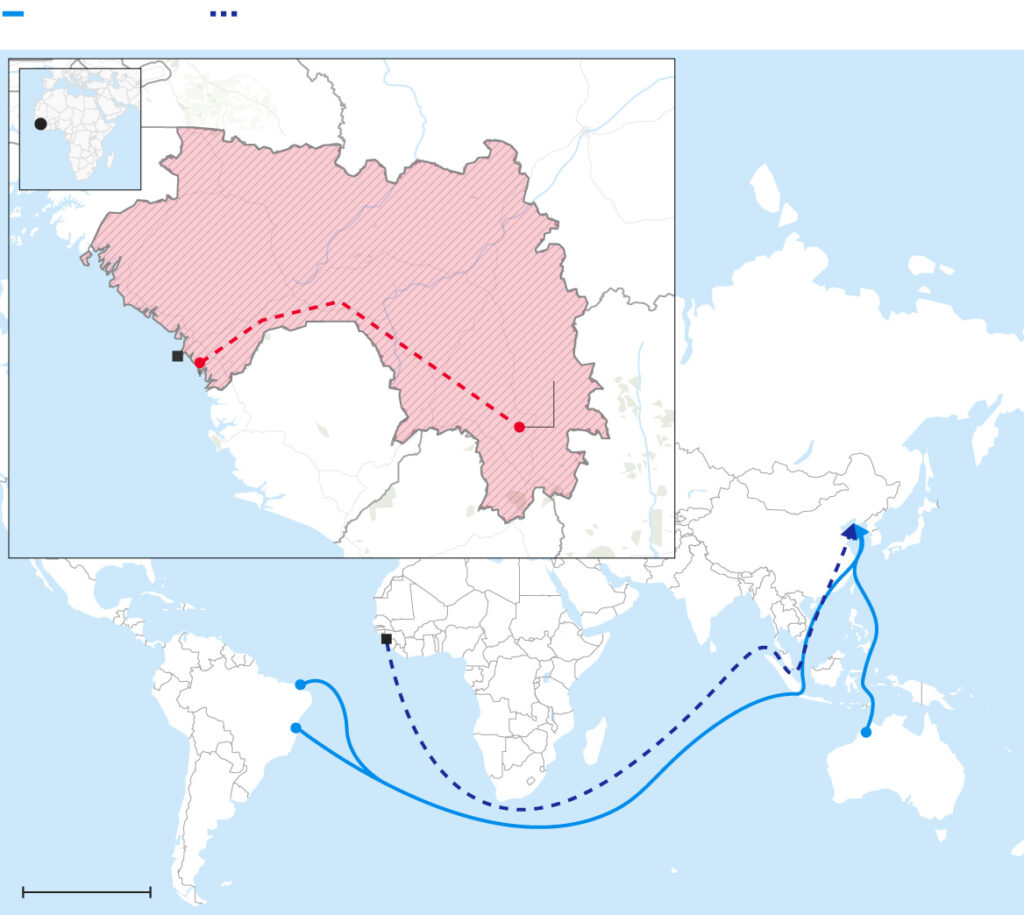
China receives vast quantities of iron ore every day to feed its immense steel industry. Traditionally, most of it comes from Australia (64 per cent) or Brazil (22 per cent). But Winning Youth was different. Its cargo was the first shipment from the massive Simandou iron ore deposits in Guinea, West Africa, having departed the anchorage at Conakry on December 2.
The Simandou mines—along with a newly built railway, port infrastructure, and a barge terminal on the Morébaya River—form one of the largest mining projects in the world. While ownership and financing are complex, the shipping analysis firm Drewry notes that Chinese entities exert the greatest strategic influence across the entire project, controlling both mine ownership and key transport infrastructure. China is the dominant stakeholder.
Simandou is not yet operating at full capacity. It took three weeks to load Winning Youth, far longer than will be required once the railway and port are fully operational. The mine itself is not the constraint; iron ore is effectively scooped up and loaded rather than mined in the traditional sense.
Production is expected to ramp up rapidly, potentially reaching 120 million tonnes per year within a few years. Almost all of this output is expected to go to China.
This matters because Australia’s dominance over China’s iron ore supply has long been seen as a deterrent to any Chinese military action against Taiwan. In the event of an invasion, Australian shipments would almost certainly cease, inflicting enormous damage on China’s industrial base.
Simandou changes that calculation. In the years ahead, a cutoff of Australian ore would be far less damaging if Guinea can supply China at scale. As global trade routes shift, so too does the strategic balance in the Taiwan Strait.
Menacing manoeuvres
Tensions in the strait are already high. Chinese military activity has become so aggressive that analysts now describe a “Fourth Taiwan Strait Crisis” as having begun in 2022.
This forms the backdrop to Sir Keir Starmer’s visit to Beijing, reportedly aimed at reviving the “golden era” of Sino-British trade seen under Theresa May. His government’s eagerness to improve relations was underscored by its recent decision to approve a vast new Chinese embassy in London—a move former Conservative leader Sir Iain Duncan Smith described as “a humiliating sell-out”.
Yet British policy is far from straightforward. Last week, the nuclear-powered attack submarine HMS Anson arrived in Gibraltar en route to Australia, where it will likely be based near Perth for at least six months as part of Submarine Rotational Force West.
This is the first stage of the AUKUS agreement, which will eventually create a joint Australia-UK-US force of nuclear attack submarines operating from Australia. Given that Anson may be the Royal Navy’s only fully operational attack submarine—and that Russian threats in the Atlantic are growing—its deployment underlines how seriously the UK prioritises AUKUS.
The purpose of AUKUS is clear: to counter China’s expanding power in the Indo-Pacific.
China, meanwhile, refuses diplomatic relations with any country that recognises Taiwan as an independent state. Only a handful of nations—most notably the Vatican—do so. Many others, including the UK, adopt “strategic ambiguity”: they recognise Beijing diplomatically while maintaining unofficial ties with Taipei.
Britain’s British Office in Taipei performs the functions of an embassy without the name; Taiwan’s Taipei Representative Office in London does the same. The fiction is thin. A parking space marked “diplomats” outside the Belgravia office betrays the reality of the relationship.
The United States has long pursued its own version of strategic ambiguity—though in practice this has meant firm support for Taiwan’s democracy.
That support was demonstrated during the 1996 Taiwan Strait Crisis, when China attempted to intimidate Taiwanese voters through missile tests and large-scale military exercises. The crisis was defused only after the US deployed two aircraft carrier groups to the region.
Growing military might
In the mid-1990s, Chinese air and naval power was weak. Today, it is anything but.
China’s economy is now roughly 20 times larger than it was then, and its defence budget—the world’s second largest—dwarfs Russia’s. The People’s Liberation Army Navy is now the largest navy in the world by number of ships, even if the US still leads in tonnage and missile capacity.
The People’s Liberation Army Air Force fields hundreds of fifth-generation stealth fighters and more than 100 long-range bombers. The Rocket Force possesses over 3,000 conventional ballistic, cruise, and hypersonic missiles capable of striking US bases and naval forces across the region.
While US defence spending still far exceeds China’s in nominal terms—nearly $1 trillion annually—this advantage shrinks when adjusted for purchasing power. Chinese weapons, ships, and personnel are far cheaper. China’s shipyards alone have built the equivalent tonnage of the entire Royal Navy in just four years, while US shipbuilding struggles even to replace ageing vessels.
In practical terms, America’s real advantage in military purchasing power may be closer to 50 per cent, not threefold.
Dangerous waters
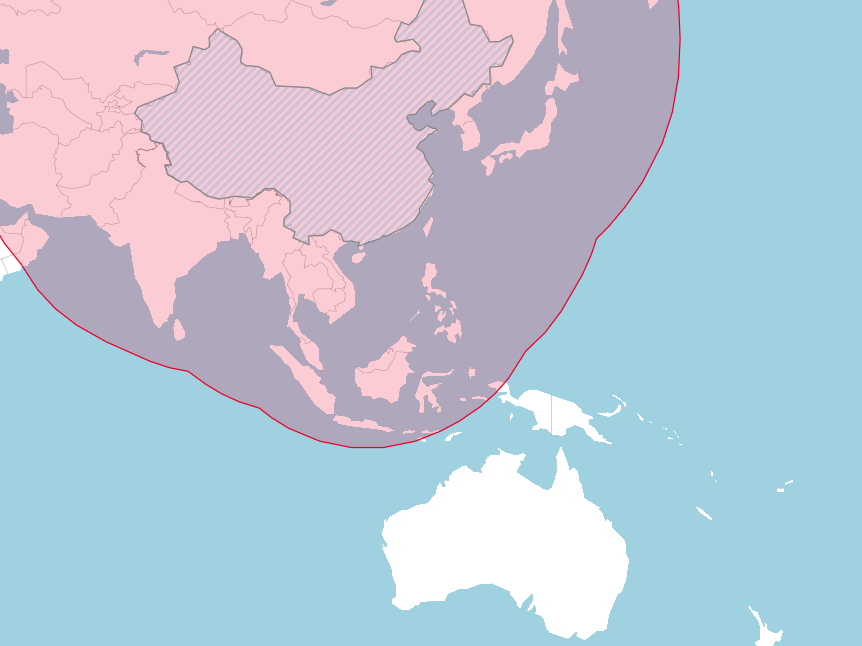
Any conflict over Taiwan would take place close to Chinese bases and far from American ones. A US or allied submarine might devastate an invasion fleet—but would then face a 2,000–4,000-mile journey to rearm, potentially to bases already destroyed by Chinese missile strikes.
Chinese forces, by contrast, could rearm and return quickly. Each Chinese ship would deliver more combat power over time than its US equivalent. Striking mainland Chinese bases might be effective—but risks nuclear escalation.
These realities help explain a leaked Pentagon “Overmatch Brief”, which concluded that the US would “most likely suffer decisive defeat” if it intervened militarily to defend Taiwan.
Public wargames conducted by the Center for Strategic and International Studies paint a slightly less bleak picture. They suggest the US could defeat a Chinese invasion—but only at catastrophic cost. Hundreds of aircraft destroyed, dozens of ships sunk, thousands of sailors killed. Taiwan would survive, but devastated. Both China and the US would emerge gravely weakened, with severe consequences for the global economy.
The lesson is ancient and clear: if you want peace, prepare for war.
The surest way to prevent Xi Jinping from invading Taiwan is not hope or diplomacy alone—but making failure more likely than success.