Trump’s Seven-Word Response Captures World Attention


4
The Middle East was thrust into profound uncertainty after Iranian media outlets reported the death of Ali Khamenei. Within hours, the geopolitical tremor reached Washington — and the world listened closely as Donald Trump delivered a brief but explosive response.
Seven words. That was all it took to ignite headlines across continents.
“We feel that that is correct.”
The statement, delivered as U.S. airstrikes on Iranian targets intensified, sent shockwaves through diplomatic corridors, financial markets, and military command centers alike. It was not just the confirmation that captured attention — it was the timing. The remarks came as the region braced for further escalation and as American forces were already engaged in what the president described as a “massive and ongoing operation.”
A Regime Rocked by Stunning Reports
Iranian outlets described the 85-year-old cleric as “martyred,” claiming he was killed in what they alleged was a joint U.S.-Israeli attack. The semi-official announcement reverberated across state media platforms, including IRIB’s Telegram channel, where Khamenei was praised as the steadfast guardian of the Islamic Revolution.
For more than three decades, Khamenei had been the Islamic Republic’s highest political and religious authority. Since assuming leadership in 1989, he stood at the center of Iran’s strategic posture — from its missile development to its controversial nuclear program and its complex web of regional alliances.
His leadership shaped modern Iran’s identity. His rhetoric defined its posture toward the West. And his authority often overruled every other institution in the country.
The sudden reports of his death raised immediate questions:
- Who would assume control?
- Could the regime maintain stability?
- Would rival factions compete for power?
Speculation spread rapidly, and uncertainty deepened by the hour.
Trump’s Escalating Rhetoric
Standing before reporters at Mar-a-Lago, Trump went further than his initial seven-word remark. He declared that “a large number” of Iran’s senior leadership figures were gone.
“The people that make all the decisions, most of them are gone,” he said.
The language was stark. It suggested not just targeted strikes — but a sweeping dismantling of Iran’s command structure.
Then came sobering confirmation from the Pentagon.
American Blood Spilled

4
As the conflict intensified, U.S. officials confirmed the first American casualties. Three U.S. service members were killed. Five more were seriously wounded.
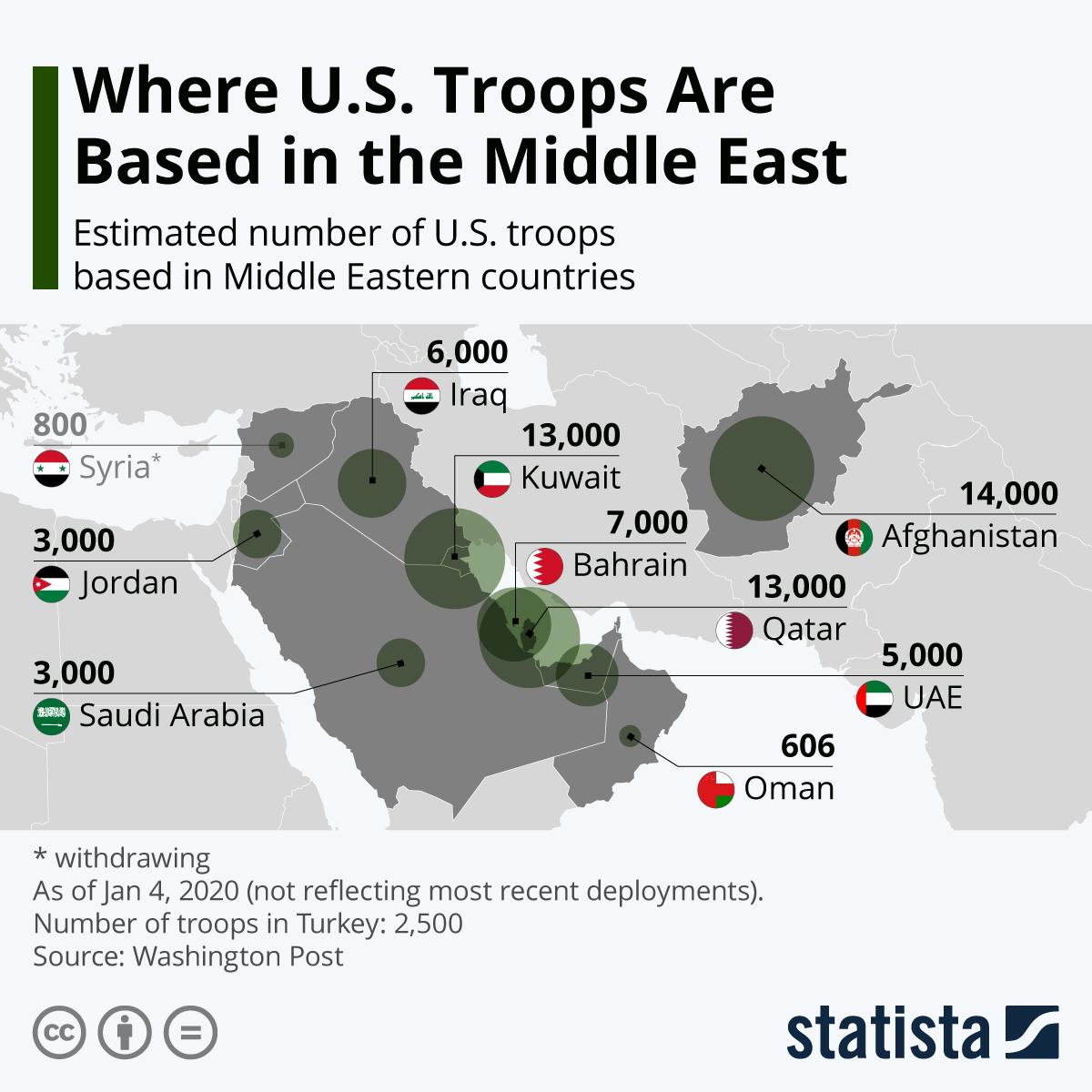
Two officials, speaking anonymously to Reuters, said the deaths occurred at a base in Kuwait — a development that marked a grim turning point. Just one day earlier, military briefings had reported no casualties.
Now, American blood had been spilled.
The human cost of escalation was no longer hypothetical.
A Campaign of Overwhelming Force
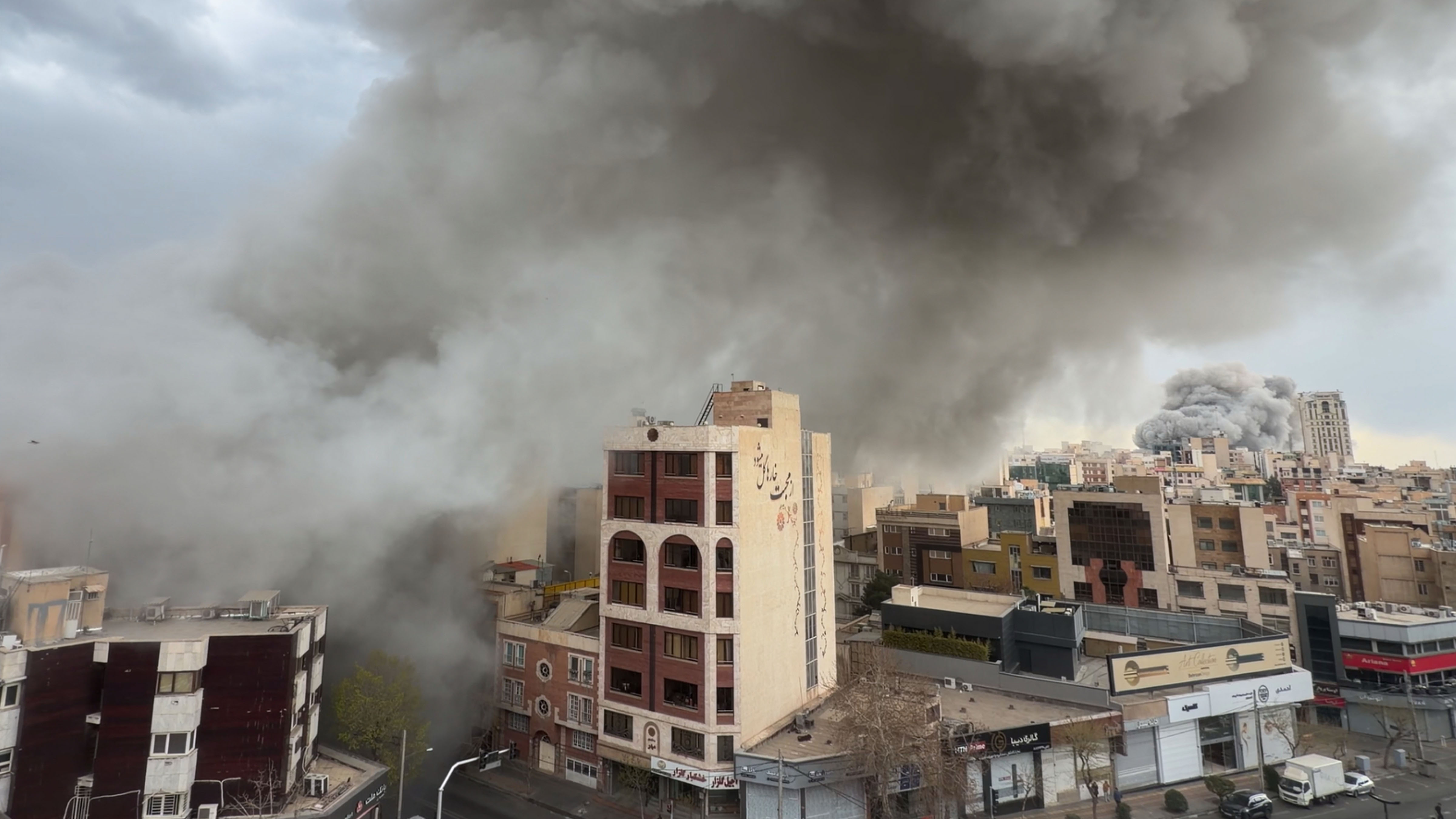
The Pentagon disclosed that U.S. aircraft and warships had struck more than 1,000 Iranian targets since the launch of major combat operations. The campaign featured the unmistakable silhouette of the B-2 Spirit — long-range stealth bombers dropping 2,000-pound bunker-busting munitions on underground missile and weapons facilities.
President Trump claimed that 48 Iranian leaders had been killed. He further asserted that nine Iranian warships had been destroyed as U.S. forces expanded operations to target Iran’s naval capabilities.
Iran responded with retaliatory missile launches as the confrontation entered its second day, raising fears that the conflict could spiral into a broader regional war.
Missiles were displayed in Tehran. Air defense systems were activated. Shipping routes and airspace corridors faced sudden disruption.
The region was on edge.
“There Will Likely Be More Casualties”
In a video address, Trump acknowledged the American deaths and warned that more could follow before the fighting concludes.
The message was clear: the United States would respond forcefully, and the campaign could extend for weeks.
In a separate interview, Trump suggested operations might continue for up to four weeks — signaling a prolonged engagement rather than a limited strike.
The warning heightened global anxiety. Oil markets reacted. Shipping insurers recalculated risk. Airlines rerouted flights. Energy analysts warned of supply chain disruptions.
The consequences were no longer confined to the battlefield.
A Divided America
Back home, public opinion appeared fractured. A new poll indicated that roughly one in four Americans supported military strikes against Iran — underscoring a nation deeply divided over the risks and potential consequences of escalation.
Supporters argued the strikes were necessary to eliminate imminent threats. Critics questioned the legal and strategic foundations of the campaign, noting the absence of formal congressional authorization and limited international backing.
At the center of the debate stood Trump’s three core justifications:
- Iran has posed a threat since the 1979 Islamic Revolution.
- Iran is nearing intercontinental ballistic missile capability capable of reaching the U.S. — a claim not currently supported by U.S. intelligence assessments.
- Iran is approaching nuclear weapons capability, despite earlier assertions that such capabilities had been “obliterated.”
These arguments now frame one of the most consequential military escalations in recent years.
The Strategic Stakes


4
The reported death of Khamenei has intensified anxiety across the Middle East and beyond. The Strait of Hormuz — through which a significant share of the world’s oil passes — remains a focal point of concern.
Global markets reacted sharply to the instability. Oil prices fluctuated. Defense stocks surged. Diplomatic channels buzzed with emergency consultations.
If confirmed, the loss of Iran’s Supreme Leader would mark one of the most dramatic leadership disruptions in the region’s modern history. Succession in Iran is governed by a complex interplay between religious authorities, political elites, and the Revolutionary Guard. Any instability within that system carries profound implications.
Would hardliners tighten their grip?
Would internal power struggles erupt?
Or could unexpected reformist currents emerge?
For now, those questions remain unanswered.
A Moment of Dangerous Uncertainty
The operation marks a dramatic escalation between Washington and Tehran — one now defined by reported leadership assassinations, confirmed American deaths, and retaliatory strikes that risk spiraling beyond initial intentions.
Trump’s seven words may have been brief, but their impact was anything but small. In moments of global crisis, language carries weight. It signals confidence. It signals resolve. And sometimes, it signals a point of no return.
The coming days will determine whether this confrontation stabilizes under diplomatic pressure or deepens into a prolonged regional conflict with global consequences.
For now, the Middle East — and much of the world — waits in tense anticipation of what comes next.