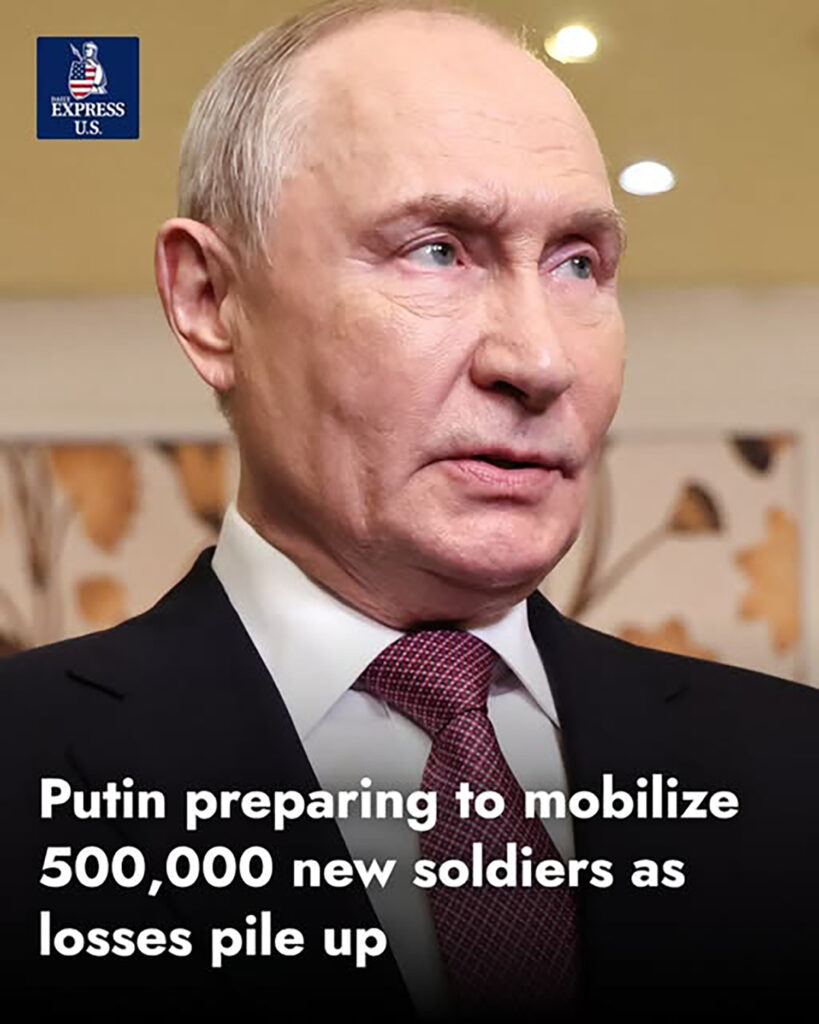
Putin Faces New Mobilization Pressure as Ukraine War Drags On
After more than four years of war, Russia could be preparing for another major expansion of its military ranks.
Ukrainian President Volodymyr Zelenskyy says Moscow is preparing to call up between 300,000 and 500,000 additional people for military service, potentially beginning in October. The claim points to a growing demand for manpower as Russian forces continue fighting across Ukraine and battlefield losses remain high.
Zelenskyy’s warning, however, describes what Ukraine believes Moscow is preparing to do; it is not confirmation that the Kremlin has publicly announced a new mass mobilization. Reuters reported in August that Zelenskyy said Russia was planning to draft another 300,000 troops after its September parliamentary elections, with a broader goal of reaching 500,000 additional soldiers in 2027.
If such a call-up takes place, it would put the Kremlin in a difficult position. Russia needs soldiers to sustain its military campaign, but another large-scale mobilization could bring the war even more directly into the lives of ordinary Russians.
A New Test for the Kremlin
Russia has already experienced the political shock that can accompany mobilization.
In September 2022, President Vladimir Putin ordered the mobilization of as many as 300,000 reservists, the country’s first such nationwide military call-up since World War II. The announcement immediately triggered protests in cities across Russia. More than 1,300 people were arrested in the first days of demonstrations, according to the independent monitoring organization OVD-Info.
The reaction went beyond the streets.
Large numbers of Russian men attempted to leave the country rather than risk being sent to the battlefield. Flights sold out, while long lines formed at several land borders. By late September 2022, Kazakhstan said approximately 98,000 Russians had crossed into the country since Putin announced the mobilization.
Other Russians fled toward Georgia, Finland, Mongolia, Armenia, Turkey and other destinations. Contemporary reporting documented an exodus involving tens of thousands of fighting-age men.
That experience remains an important backdrop to any discussion of another mass call-up.
The Manpower Problem
The Kremlin has relied heavily on recruitment and military contracts to maintain Russia’s force levels during the prolonged conflict. But sustaining a large army over several years comes with enormous personnel demands.
Recent assessments have put Russian military losses at extremely high levels. Britain’s Chief of the Defence Staff, Air Chief Marshal Sir Richard Knighton, said in September 2026 that more than 500,000 Russian soldiers had been killed since the full-scale invasion began, while total Russian casualties, including wounded personnel, were estimated at around 1.5 million. Those figures are estimates and cannot be independently verified in full.
Ukraine has repeatedly argued that Russia’s battlefield losses are forcing Moscow to find increasingly large numbers of replacements.
Zelenskyy has suggested that the Kremlin could seek those recruits away from Russia’s largest cities, attempting to limit the political visibility of the mobilization. Reuters reported that he described the proposed recruitment as a “peripheral mobilisation” concentrated in Russia’s far-flung regions.
Memories of 2022
The Kremlin also has to contend with the memory of what happened the last time it ordered a major mobilization.
In 2022, protests erupted almost immediately. Police detained demonstrators in Moscow, St. Petersburg and other cities, while videos showed confrontations between protesters and security forces.
At the same time, Russians rushed toward the borders.
The scenes became one of the most visible signs that the war had moved from television screens into everyday life. Families were suddenly dealing with military summonses, men were searching for ways to avoid deployment, and thousands were leaving the country.
For the Kremlin, another mobilization would therefore involve more than simply finding additional soldiers. It could also revive memories of the disruption caused by the 2022 call-up.
Training and Readiness
There is another question: how quickly could newly recruited soldiers actually become effective combat troops?
Zelenskyy has argued that Russia could send poorly trained personnel toward the battlefield. Ukrainian officials and Western military analysts have previously raised concerns about the training and readiness of some Russian units.
The Institute for the Study of War has also highlighted potential administrative and training constraints, noting that Russia faces challenges in simultaneously recruiting, equipping, training and integrating very large numbers of new personnel.
That means a larger number of recruits would not necessarily translate immediately into a larger number of fully trained frontline soldiers.
The Economic Cost
The manpower question is also tied to Russia’s economy.
More soldiers require more salaries, equipment, weapons, ammunition, food, transportation and training. The longer the war continues, the greater the pressure on government resources.
Russia has already shifted substantial economic capacity toward defense production. Maintaining that effort while replacing battlefield losses creates competing demands for workers and public spending.
A major new mobilization could therefore have consequences far beyond the battlefield.
An Uncertain Next Chapter
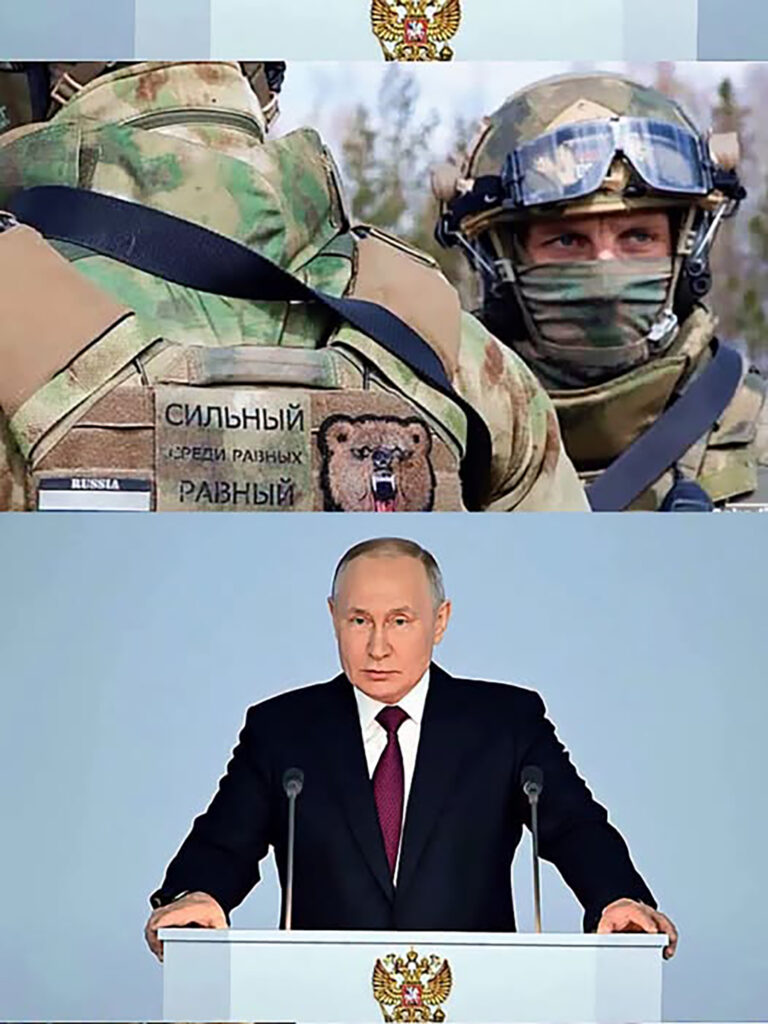
For now, the reported October mobilization remains a warning from Kyiv rather than a publicly confirmed Kremlin order.
But the possibility illustrates one of the central challenges facing Russia as the war enters another year: maintaining the size of its military while managing the political and economic consequences of a conflict that has lasted far longer than many initially expected.
The 2022 mobilization demonstrated that sending hundreds of thousands of people into military service can produce protests, panic and a significant movement of people across Russia’s borders.
Now, according to Zelenskyy, Moscow may be preparing to ask for hundreds of thousands more.
Whether Russia ultimately carries out such a mobilization, and on what scale, remains uncertain. What is clear is that any large new call-up would represent a significant moment in the war—and another test of Russia’s military capacity, economy and society.