Russia’s Massive Gas Pivot: The Pipeline That Could Reshape Global Energy
4
In the shifting landscape of global geopolitics and energy markets, a colossal infrastructure project is taking shape across the vast steppes of Eurasia. Russia is advancing plans for a massive natural gas pipeline that could fundamentally transform energy flows between East and West. Known as Power of Siberia 2 gas pipeline, and sometimes referred to as Soyuz Vostok gas pipeline, the project represents one of the most ambitious energy corridors ever proposed between Russia and China.
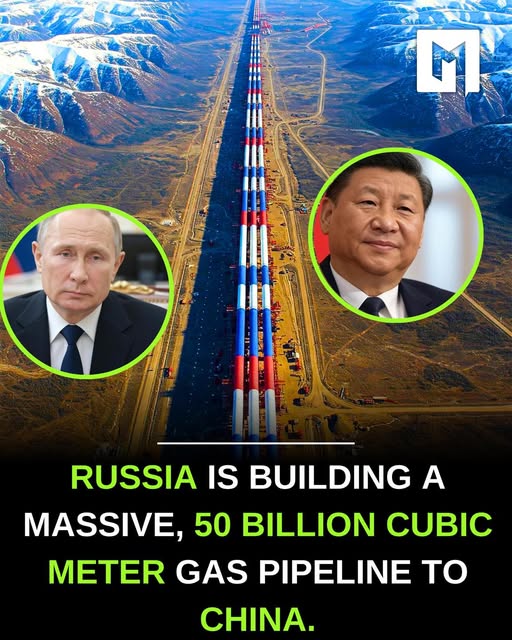
Designed to transport up to 50 billion cubic meters of natural gas per year, the pipeline signals Moscow’s determination to pivot its energy strategy eastward after years of dependence on European markets. For decades, Europe was the primary destination for Russian gas exports. Today, however, the geopolitical map of energy is being redrawn.
This new pipeline could become the backbone of a new Eurasian energy alliance.
The Strategic Shift East
For most of the modern era, Russia’s enormous gas reserves were primarily funneled westward into Europe. Pipelines stretching thousands of miles supplied homes, factories, and power plants across the continent. That system changed dramatically following the Russian invasion of Ukraine, which triggered sweeping sanctions and prompted European countries to reduce or eliminate their reliance on Russian energy.
The consequences were immediate and profound. Russian gas exports to Europe fell sharply as nations rushed to diversify supplies, investing heavily in liquefied natural gas (LNG) terminals and alternative sources.
Faced with shrinking Western markets, Moscow began accelerating a long-discussed strategy: turning toward Asia.
At the center of this pivot lies China, the world’s largest energy consumer and one of the fastest-growing natural gas markets on the planet. The new pipeline project aims to connect Russia’s enormous Siberian gas fields directly to China’s expanding energy network, creating a supply route capable of rivaling the volumes once shipped to Europe.
For Russia, the project offers an economic lifeline and strategic realignment. For China, it promises a stable, long-term supply of natural gas delivered via land routes that cannot be easily disrupted by maritime chokepoints.
Anatomy of a Mega-Pipeline
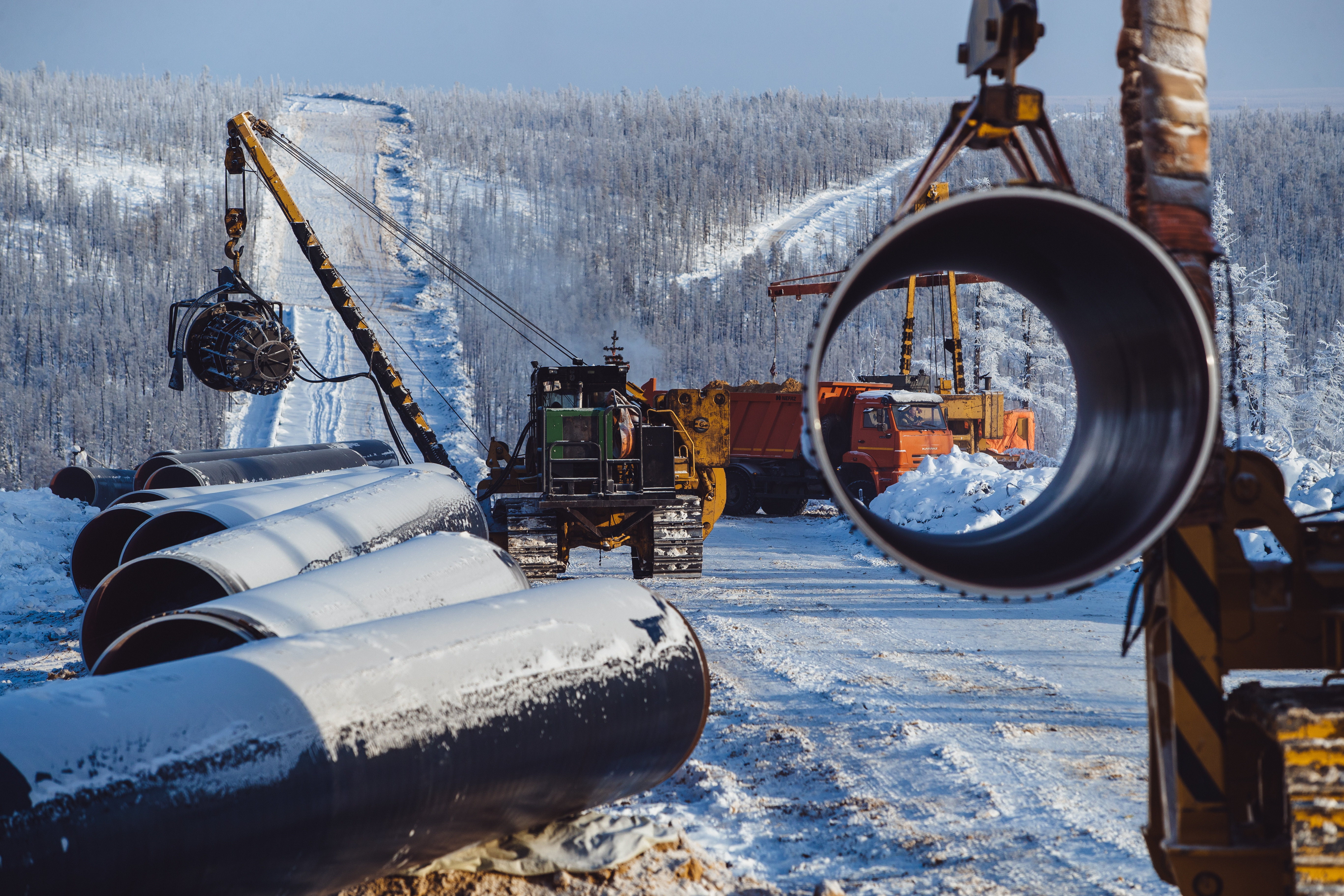
The proposed Power of Siberia 2 system is nothing short of engineering on a continental scale.
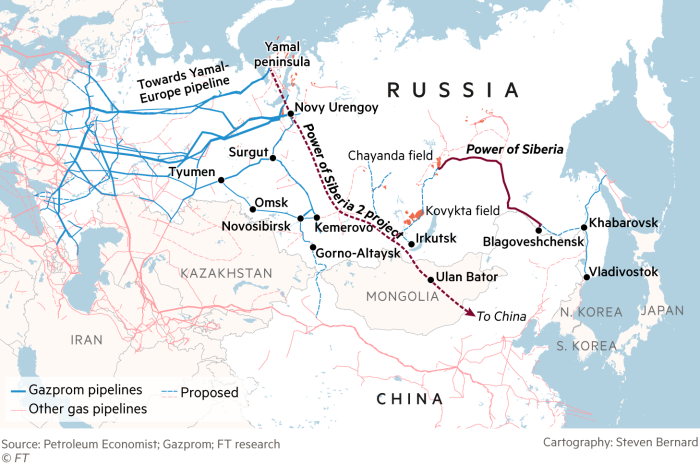
The pipeline will transport gas from the vast reserves of western Siberia—fields that historically supplied Europe—across thousands of miles of rugged terrain before reaching northern China.
One of the key segments, a 598-mile (approximately 960-kilometer) stretch, will pass through Mongolia. This section, known as Soyuz Vostok, serves as the critical bridge between the Russian and Chinese networks.
Technically, the infrastructure will be enormous:
- Pipe diameter: 1.42 meters (roughly 56 inches)
- Annual capacity: up to 50 billion cubic meters
- Major compressor stations: at least five along the route
- Construction terrain: Siberian forests, Mongolian steppes, and remote mountainous regions
Compressor stations play a vital role in pipelines of this magnitude. By periodically increasing gas pressure, they allow fuel to travel vast distances efficiently across thousands of kilometers. Without these stations, transporting gas over such distances would be impossible.
The scale alone places the project among the largest pipeline ventures ever attempted.
Building on an Earlier Energy Pact
The new pipeline is not emerging in isolation. Instead, it builds on a foundation laid more than a decade ago.
In 2014, Russia and China signed a landmark 30-year natural gas agreement, one of the largest energy contracts in history. That deal paved the way for the first pipeline connecting the two countries, the Power of Siberia pipeline, which officially began delivering gas in 2019.
That original pipeline sources gas from eastern Siberian fields and carries it into northeastern China. While significant, its capacity is far smaller than what the new project promises.
The proposed Power of Siberia 2 line would dramatically expand the partnership by tapping western Siberian gas reserves—the same reserves that once supplied Europe.
In other words, gas that historically flowed toward Berlin, Warsaw, or Paris could one day flow east toward Beijing instead.
Gazprom’s New Energy Map
Driving the project forward is Russia’s state energy giant Gazprom, the company responsible for the majority of the country’s natural gas exports.
For Gazprom, the geopolitical shifts of recent years have forced a strategic overhaul. Europe once accounted for the bulk of its export revenue. Now, the company is racing to develop alternative markets to compensate for declining Western demand.
Asia offers that opportunity.
China’s demand for natural gas continues to surge as the country transitions away from coal in many sectors. Natural gas burns cleaner than coal and is seen as a key transitional fuel in China’s broader energy transformation.
By securing a direct pipeline connection capable of delivering massive volumes of gas, Gazprom hopes to anchor long-term export stability while strengthening economic ties with China.
The Geopolitical Dimension
Beyond economics, the pipeline carries powerful geopolitical symbolism.
Energy has long been a central pillar of Russia’s global influence. By redirecting gas flows toward China, Moscow is effectively building a new strategic axis across Eurasia.
For China, the benefits are equally significant. The country relies heavily on imported energy, much of which arrives by sea through critical chokepoints such as the Strait of Malacca. A land-based pipeline from Russia reduces that vulnerability and diversifies supply routes.
The partnership therefore aligns with the strategic goals of both nations:
- Russia: Replace lost European markets and deepen Asian partnerships.
- China: Secure stable energy imports and reduce dependence on maritime routes.
The project also reinforces a broader pattern of cooperation between the two countries in trade, infrastructure, and geopolitics.
Challenges Ahead
Despite its promise, the project faces significant hurdles.
Constructing thousands of miles of pipeline through some of the world’s most remote landscapes is enormously expensive and technically demanding. Negotiations over pricing, financing, and construction timelines have also been complex.
China is known for driving hard bargains on energy prices, and securing mutually acceptable terms remains a critical piece of the puzzle.
Additionally, global energy markets are evolving rapidly. The expansion of LNG infrastructure, the push toward renewable energy, and shifting geopolitical alliances all influence the long-term economics of large pipeline projects.
Still, both sides continue to signal strong interest in moving forward.
A New Energy Era
If completed, the Power of Siberia 2 pipeline could fundamentally reshape Eurasian energy flows.
Instead of gas streaming primarily toward Europe, vast volumes could move eastward into Asia. This transformation would mark one of the most significant shifts in global energy trade since the Cold War.
The implications extend far beyond economics. Energy infrastructure has always been intertwined with geopolitics, alliances, and national security.
By building a pipeline capable of delivering 50 billion cubic meters of gas annually, Russia is not just constructing an engineering marvel—it is redrawing the energy map of the 21st century.
For Moscow, it represents resilience in the face of Western sanctions.
For Beijing, it promises reliable fuel for continued economic growth.
And for the world, it signals a profound shift in the balance of energy power across Eurasia.
