Putin Congratulates Mojtaba Khamenei as Iran’s New Leader, Pledges Russia’s Continued Support
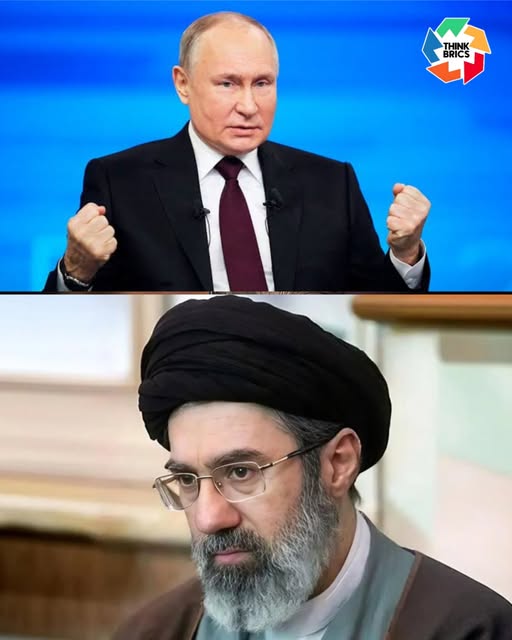
In a development that quickly drew international attention, Russian President Vladimir Putin has extended his congratulations to Mojtaba Khamenei following his reported appointment as Iran’s new leader. The message, released through the Kremlin on Monday, signaled Moscow’s readiness to continue strengthening its relationship with Tehran during what many observers describe as a period of significant geopolitical uncertainty.
According to the official statement, Putin expressed confidence that Mojtaba Khamenei would continue the legacy of his father, Ali Khamenei, guiding the nation through what he described as “severe trials” while preserving Iran’s political stability and national unity.
The message was brief but powerful in its symbolism. It underscored Russia’s enduring strategic partnership with the Islamic Republic and highlighted the deepening ties between the two countries amid shifting global alliances.
A Message of Confidence and Continuity
Putin’s congratulatory remarks emphasized continuity in Iran’s leadership and political direction. In his message, the Russian president expressed his belief that Mojtaba Khamenei would carry forward the policies and vision that have shaped Iran’s governance for decades.
He noted that the new leader would face significant challenges in the coming years, both domestically and internationally. Yet Putin voiced confidence that Mojtaba Khamenei would guide the nation with determination and resolve.
The statement described the moment as one of national importance for Iran. Leadership transitions in the Islamic Republic have always drawn global scrutiny, given the country’s critical role in Middle Eastern politics and its influence across multiple regional issues.
Putin’s words appeared designed not only as a personal congratulation but also as a diplomatic signal—one reinforcing Russia’s commitment to maintaining strong relations with Tehran.
Russia and Iran: A Strategic Partnership
Relations between Russia and Iran have grown increasingly close in recent years. The two nations have collaborated across multiple fields, including energy, trade, regional security, and military coordination.
Both governments frequently emphasize their shared interest in promoting a multipolar global order—one in which global power is not dominated by a single bloc or superpower.
This alignment has brought Moscow and Tehran closer together on the international stage, particularly in response to sanctions, geopolitical tensions, and shifting alliances.
Putin’s statement reaffirming Russia’s “unwavering support for Tehran” reflects that broader strategic partnership. It suggests that Moscow views Iran not only as a regional ally but also as a key partner in shaping the geopolitical landscape of the 21st century.
The Legacy of Ali Khamenei
Any discussion of Iran’s leadership inevitably returns to the long tenure of Ali Khamenei, who has served as the country’s Supreme Leader since 1989. Over more than three decades, he has overseen major transformations in Iran’s political, military, and diplomatic posture.
Under his leadership, Iran navigated regional conflicts, economic sanctions, and diplomatic negotiations that repeatedly reshaped its global relationships.
Putin’s reference to continuing his father’s work “with honor” reflects recognition of that legacy. It also hints at expectations that Iran’s broader strategic direction will remain largely consistent despite the leadership change.
For many observers, continuity in Iran’s leadership structure often signals stability in the country’s long-term policies.
Mojtaba Khamenei Steps Into the Spotlight
Mojtaba Khamenei has long been considered an influential figure within Iran’s political and religious establishment, though he has traditionally maintained a relatively low public profile compared to other prominent leaders.
Over the years, analysts and political observers have speculated about his potential role in the future leadership of the country. His close connection to the nation’s highest authority and his involvement in political networks have made him a subject of significant attention both inside Iran and abroad.
Now, with reports of his appointment as the country’s new leader, Mojtaba Khamenei moves from the background into one of the most powerful positions in the Middle East.
His leadership will likely be closely watched by governments, analysts, and international organizations seeking clues about Iran’s next phase.
“Unwavering Support” From Moscow
Perhaps the most striking part of Putin’s message was his pledge of continued solidarity with Iran.
In the Kremlin statement, the Russian president expressed his desire to “confirm unwavering support for Tehran and solidarity with our Iranian friends.”
Such language is often carefully chosen in diplomatic communications. Words like “unwavering” signal a long-term commitment that extends beyond immediate political developments.
For Iran, which has faced years of economic sanctions and international pressure, strong partnerships with major powers such as Russia carry significant political and strategic value.
For Russia, cooperation with Iran also strengthens its influence in the Middle East and provides opportunities for collaboration in energy markets, infrastructure projects, and regional security initiatives.
A Changing Global Landscape
The timing of the message comes during a period of rapid change in global geopolitics. Alliances are shifting, conflicts are evolving, and new partnerships are emerging as countries seek to adapt to a complex international environment.
Russia and Iran have increasingly found common ground in their criticism of Western-led political and economic systems. Both governments have advocated for a more decentralized global order in which regional powers play a larger role in shaping international decisions.
Putin’s congratulatory message can therefore be seen not only as a diplomatic gesture but also as part of a broader geopolitical narrative—one emphasizing cooperation between countries seeking to expand their influence in global affairs.
Regional and International Reactions
Leadership transitions in Iran typically attract attention far beyond its borders. Governments across the Middle East, Europe, Asia, and North America closely monitor developments in Tehran because of the country’s strategic importance.
Iran’s policies influence energy markets, regional conflicts, and diplomatic negotiations on issues ranging from nuclear programs to trade agreements.
With Mojtaba Khamenei stepping into a new leadership role, many analysts expect governments around the world to evaluate how his leadership style and priorities might shape Iran’s next chapter.
Some will look for continuity. Others will search for signs of change.
Looking Ahead
For now, Putin’s message represents one of the first major international responses to the leadership transition. By offering immediate congratulations and reaffirming Russia’s support, the Kremlin has made clear that its partnership with Tehran remains a priority.
Whether through economic cooperation, political dialogue, or regional coordination, the relationship between Moscow and Tehran appears set to continue playing a significant role in global geopolitics.
As Mojtaba Khamenei begins his tenure as Iran’s leader, the world will be watching closely.
His decisions will influence not only Iran’s domestic future but also the delicate balance of power across the Middle East and beyond.
And with Russia signaling strong support from the outset, the evolving partnership between the two nations may become an even more important factor in shaping the geopolitical landscape of the years ahead.